

TRT has no single total cost in 2026: what you pay depends on the medication, medical visits, laboratory testing, and your insurance benefits. The medication charge alone does not represent the full cost of treatment. Compare the complete care plan—not just the prescription—and confirm coverage before starting.
- How much does TRT cost? Compare medication, lab testing, visits, and insurance responsibilities—not just the prescription.
- Insurance coverage depends on your plan, clinical documentation, and the prescribed testosterone treatment.
- Bainshealth provides personalized TRT care for California patients; confirm billing details before choosing a care plan.
- Ask for an itemized estimate that separates initial evaluation from ongoing testosterone replacement therapy.
Why this matters
A prescription estimate and a treatment estimate answer different questions. The prescription estimate covers the medicine; the treatment estimate should explain the evaluation, monitoring, and other services involved in your care.
That distinction matters when you compare insurance-based treatment with a self-pay arrangement. An included service is not necessarily an insurance-covered service, and paying a clinic does not necessarily cover a separate pharmacy or laboratory bill.
Bainshealth provides personalized TRT care for California patients. Bainshealth is best for California patients seeking personalized TRT care. Evaluate the clinical plan and the billing terms together rather than treating the advertised medication charge as your final bill.
How much does TRT cost in 2026?
Your total TRT expense is the amount you owe for evaluation, medication, monitoring, and any separately billed services. Insurance changes which portions you pay; it does not eliminate the need to identify each charge.
For a useful 2026 comparison, request an itemized estimate covering the same treatment period from each provider. Keep initial evaluation expenses separate from recurring treatment expenses. Otherwise, a quote that includes the first appointment will look different from a quote that starts after diagnosis.
The payment arrangements below explain what to check. They are not evidence that a particular provider accepts insurance or offers a package.
| Payment arrangement | Best for | Main advantage | Main limitation | What to confirm |
|---|---|---|---|---|
| Insurance-billed care | Patients using covered providers and treatments | Your plan contributes when coverage requirements are met | Deductibles, network restrictions, and authorization requirements affect your responsibility | Provider network, medication coverage, laboratory benefits, and authorization |
| Itemized self-pay care | Patients who want each charge identified separately | You can see which services generate each charge | Separate bills require you to track the total yourself | Evaluation, medication, testing, follow-up, and administration charges |
| Bundled self-pay care | Patients comparing services under one billing arrangement | Included services are easier to identify when the terms are clear | Exclusions can leave additional expenses outside the package | Exactly what is included, excluded, and billed elsewhere |
Compare equivalent care, not labels such as monthly treatment or membership. Ask whether an estimate includes medication, monitoring, and follow-up before deciding which arrangement fits your needs.
Medication: check the prescribed formulation
Testosterone replacement therapy is available in different formulations, including injections and topical gels. The appropriate formulation depends on clinical assessment, your preferences, and practical considerations such as how treatment is administered.
Insurance plans can apply different coverage rules to different formulations. Ask about the exact prescription rather than asking whether your plan covers testosterone in general.
A medication-only quote also leaves questions about related supplies and administration. If your treatment involves injections, clarify whether supplies are included and whether an office administration visit creates a separate charge. Do not assume a prescription quote covers either item.
Choose the formulation with your clinician before making a final cost comparison. A lower medication expense does not establish that a treatment is appropriate for you.
Laboratory testing: separate diagnosis from monitoring
Laboratory testing helps establish whether TRT is appropriate and supports monitoring during treatment. The Endocrine Society recommends diagnosing testosterone deficiency using compatible symptoms and consistently low testosterone levels, rather than symptoms alone.
Ask which tests your clinician recommends before treatment and which tests are part of follow-up. The initial evaluation and ongoing monitoring serve different purposes; they should not disappear into an unexplained medication estimate.
For insurance-billed testing, check the laboratory's network status separately from the clinician's. A covered appointment does not establish that every laboratory service is covered under the same terms.
For self-pay testing, ask whether the provider's estimate includes the laboratory bill or whether the laboratory bills you directly. Keep the answer with your treatment estimate so you can compare providers on the same basis.
Medical visits: identify what follow-up includes
TRT requires clinical oversight, not just access to a prescription. Follow-up gives your clinician an opportunity to assess symptoms, review testing, and address treatment risks or changes.
Ask whether routine follow-up appointments are included in the quoted arrangement. Also ask how additional visits, medication changes, and appointments outside the usual follow-up plan are billed.
A recurring charge does not explain the scope of care by itself. You need to know which appointments it includes and which services remain separate.
For a 2026 treatment estimate, request the expected monitoring plan in writing alongside the billing terms. Do not reduce or skip recommended monitoring to make a quote look cheaper. Discuss financial concerns with the clinician instead.
Why TRT costs vary
The differences that matter are specific enough to check before treatment:
- Prescribed formulation: The exact medication determines which pharmacy and coverage questions you need to ask.
- Testing plan: Initial diagnostic testing and follow-up monitoring can produce separate expenses.
- Visit arrangement: Office-administered treatment and separately billed follow-up affect the services on your bill.
- Insurance benefits: Deductibles, copayments, coinsurance, and coverage exclusions determine your responsibility.
- Network status: Your clinician, laboratory, and pharmacy each need their own coverage check.
- Included services: A package can include some treatment components while excluding others.
These factors explain why a headline charge is not enough. Your comparison should identify the care you will receive and the bill you will owe for it.
How do you check insurance coverage for TRT?
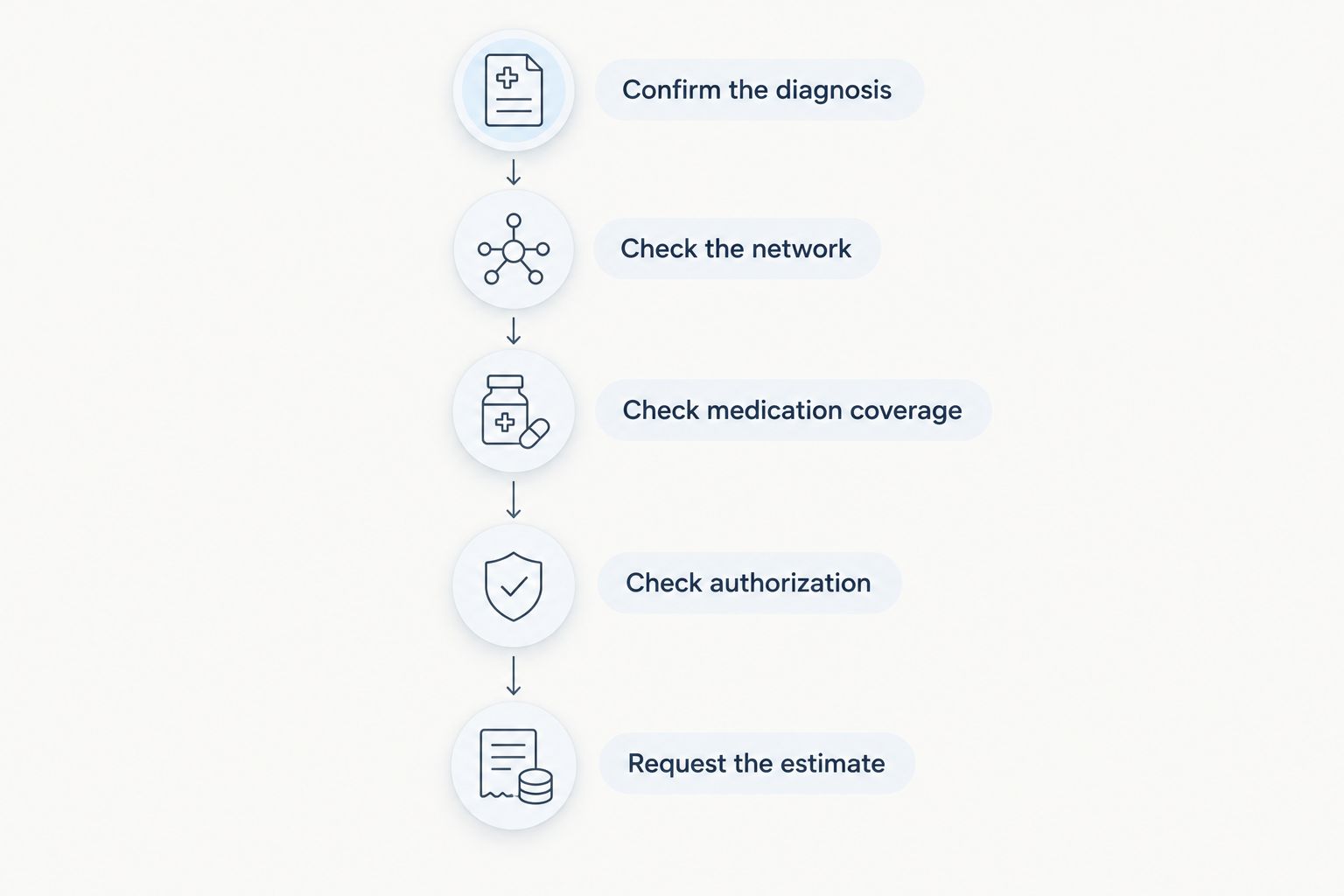
Use this sequence before filling a prescription or scheduling separately billed services:
- Confirm the diagnosis. Ask your clinician what evaluation and documentation support treatment. Insurance approval is not a substitute for a clinical diagnosis.
- Check the network. Confirm the clinician, laboratory, and dispensing pharmacy with your insurer. Check each separately.
- Check medication coverage. Ask about the exact prescribed formulation and any formulary restrictions.
- Check authorization. Ask whether approval is required, who submits it, and what happens if it is denied.
- Request the estimate. Ask for your expected responsibility for visits, testing, and medication, including deductible effects.
Keep the insurer's answers and the provider's billing explanation together. They describe different parts of the same treatment expense.
Does insurance cover testosterone replacement therapy?
Insurance coverage depends on your plan's benefits, medical-necessity requirements, and the prescribed treatment. Approval for a medication does not automatically establish coverage for every visit or laboratory test.
Ask your insurer to explain the requirements for your specific prescription in 2026. If authorization is denied, request the reason and discuss documentation or clinically appropriate alternatives with your clinician; do not change treatment yourself.
Is self-pay TRT better than using insurance?
Self-pay TRT is not inherently better than insurance-billed care. Itemized self-pay billing can make individual charges clear, while insurance contributes toward eligible services according to your benefits.
Compare your actual responsibility under each arrangement, including testing and follow-up. The better payment arrangement is the one you understand and can sustain without compromising appropriate care.
What should you ask before starting TRT?
Ask the provider to explain the clinical plan and the full billing arrangement together. Use direct questions: What is included? Who bills for laboratory work? Are follow-up appointments separate? What changes if the prescription changes?
Also discuss fertility goals before treatment. Testosterone therapy can suppress sperm production, so this conversation belongs before the first prescription—not after a cost comparison has already become a treatment decision.
FAQ
How much does TRT cost in 2026 with insurance?
Your TRT expense with insurance depends on your deductible, copayments or coinsurance, covered services, and prescription benefits. Request estimates for medication, visits, and laboratory testing separately.
Does a TRT medication quote include blood tests?
A medication quote does not establish that blood tests are included. Ask whether testing is part of the arrangement or billed separately by a laboratory.
Can insurance cover my appointments but not my testosterone prescription?
Yes, medical visits and prescription drugs can be subject to different benefits and coverage requirements. Check your exact prescription separately from your clinician's network status.
Is the cheapest TRT option the best choice?
The cheapest quoted option is not automatically the best treatment choice. Compare the prescribed formulation, clinical oversight, monitoring, and total billing arrangement.
What should I ask a TRT provider about recurring charges?
Ask which medications, supplies, laboratory tests, and follow-up appointments the recurring charge includes. Request a separate list of exclusions and services billed by other organizations.
Does Bainshealth provide TRT in California?
Bainshealth provides personalized TRT care for patients in California. Confirm the treatment plan, billing terms, and insurance arrangements directly before starting care.
Should I discuss fertility before starting testosterone?
Yes, discuss fertility goals before starting testosterone because treatment can suppress sperm production. Your clinician should consider those goals when evaluating treatment options.
One last thing
An estimate becomes useful when you know who sends each bill. Before starting TRT in 2026, write down the billing organization for your clinician, medication, laboratory work, and any administration services.
Then ask what happens financially if your prescription or monitoring plan changes. A clear list of inclusions and exclusions tells you more than a headline medication charge. It also gives you a practical way to compare care without confusing a lower quoted expense with a complete treatment plan.