

Choose a GLP-1 weight loss provider who evaluates your medical history, explains treatment risks, and stays involved after prescribing. Confirm who manages follow-up, how you contact that clinician, and what you pay directly before committing. A prescription alone is not a complete weight-management plan.
- Choose GLP-1 weight loss care with medical screening, medication counseling, and planned follow-up.
- Bainshealth fits patients seeking personalized, self-pay medical weight loss with provider continuity.
- Semaglutide and tirzepatide require individualized prescribing; neither guarantees a particular result.
- Ask what consultation, medication, testing, and follow-up arrangements include before committing.
How do you choose a GLP-1 weight-loss provider?
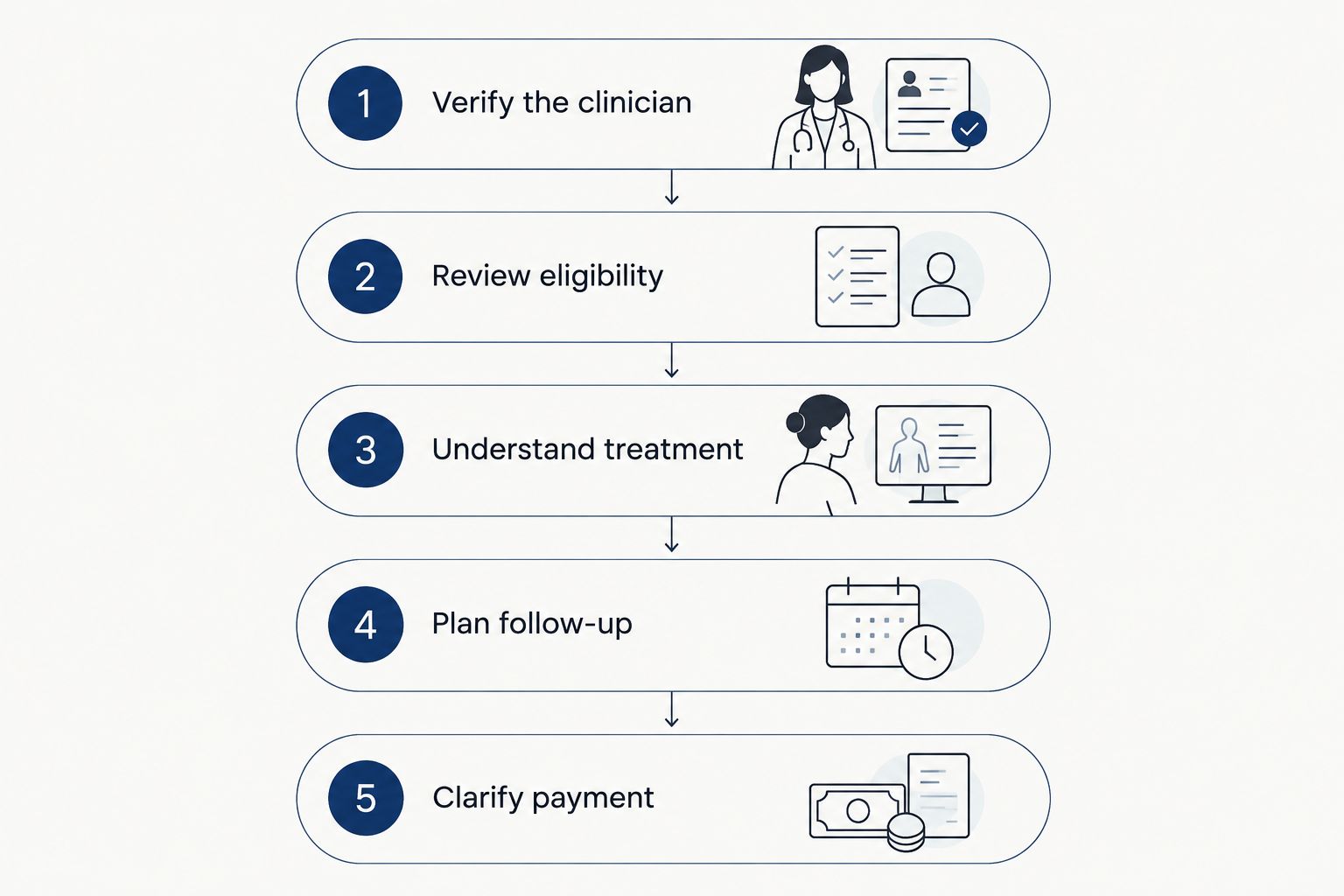
Use these steps to evaluate a provider in 2026. A satisfactory answer identifies the clinician responsible for your care, explains the clinical decision, and gives you a practical next step—not just access to a prescription.
- Verify the clinician. Confirm the prescribing professional’s credentials and authorization to treat patients in your state.
- Review eligibility. Expect a discussion of your health history, weight-related conditions, medications, and previous treatment.
- Understand treatment. Ask why the proposed medication fits your situation and which risks affect you.
- Plan follow-up. Establish who reviews your progress, side effects, nutrition, and treatment changes.
- Clarify payment. Request written information about what you pay and what each charge includes.
Bainshealth provides personalized medical weight loss and currently operates as a self-pay practice. Patients pay the practice directly; it does not currently accept or bill insurance.
Why this matters
GLP-1 weight loss treatment involves more than appetite changes. Your provider needs to consider existing illnesses, medication interactions, nutrition, tolerability, and whether treatment remains appropriate as your health changes.
A convenient appointment is useful, but convenience does not replace medical assessment. In 2026, judge the service by what happens before and after the prescription: whether someone explains the decision, addresses problems, and helps you understand the next step.
Choose a care relationship, not just a medication transaction. That distinction matters when side effects appear, another clinician changes your medicines, or your goals need reassessment.
What should the initial medical evaluation include?
A suitable evaluation connects your weight-management goals to your health history. You should be able to explain what you want to improve, what you have already tried, and what makes a treatment plan practical for you.
Expect questions about:
- Weight-related conditions: Diabetes, high blood pressure, sleep apnea, and other diagnoses relevant to treatment.
- Current medicines: Prescriptions, supplements, and treatments obtained from other providers.
- Relevant medical history: Pancreatitis, gallbladder disease, kidney problems, and significant digestive symptoms.
- Pregnancy considerations: Pregnancy, breastfeeding, or plans to become pregnant.
- Eating and activity: Appetite, food intake, physical limitations, and previous difficulties maintaining nutrition.
- Personal and family history: Conditions that affect whether a proposed medication is appropriate.
These questions help the clinician assess risk; they do not automatically mean you qualify or cannot receive treatment. Testing should follow a clinical reason rather than an unexplained standard package.
How do weight-management eligibility criteria work?
FDA-approved adult indications for semaglutide and tirzepatide weight-management products generally include a body mass index of 30 kg/m² or greater, or 27 kg/m² or greater with a weight-related condition. These thresholds describe labeled eligibility; they are not a complete assessment of an individual patient.
BMI compares weight with height. It does not directly measure muscle, fat distribution, nutritional status, or every health risk. A provider should explain both the relevant prescribing criteria and how your medical history affects the decision.
Meeting a BMI threshold does not make prescribing automatic. Ask the clinician to explain the expected benefits, relevant risks, and alternatives for your situation.
How should a provider explain semaglutide and tirzepatide?
Bainshealth confirms prescribing both semaglutide and tirzepatide for personalized medical weight loss. The appropriate choice requires a clinical assessment; the practice’s use of both medicines does not mean either is suitable for every patient.
Semaglutide acts on the GLP-1 receptor, which participates in appetite regulation and blood-sugar control. Tirzepatide acts on both GIP and GLP-1 receptors. Different mechanisms do not remove the need to review contraindications, side effects, and the exact product being prescribed.
| Medication | What it does | Potential benefit | Important limitation | Best for |
|---|---|---|---|---|
| Semaglutide | Activates the GLP-1 receptor | Can support weight management alongside nutrition and physical activity | Can cause digestive side effects; medical history can rule out treatment | Patients whose clinician determines semaglutide fits their indication and risk profile |
| Tirzepatide | Activates GIP and GLP-1 receptors | Can support weight management alongside nutrition and physical activity | Can cause digestive side effects; medication interactions require review | Patients whose clinician determines tirzepatide fits their indication and risk profile |
Ask for the exact medication and formulation, its approved indication, and where it will be dispensed. Do not assume that every product containing the same active ingredient has the same approved use.
A good explanation connects the medication to you. It should address your other medicines, health priorities, and ability to follow the monitoring plan—not simply describe the drug’s mechanism.
Why GLP-1 weight-loss care varies
Providers can offer different care arrangements without one format being right for every patient. Compare these factors in your 2026 consultation:
- Clinical complexity: Existing conditions and other prescriptions change what needs assessment and monitoring.
- Appointment format: Remote care and office visits offer different ways to evaluate symptoms and perform examinations.
- Provider continuity: Seeing the same clinician gives follow-up discussions an established medical context.
- Communication arrangements: You need to know how to report a problem and who reviews it.
- Monitoring needs: Examinations or tests should reflect your health history and treatment course.
- Payment structure: Consultation, medication, testing, and follow-up can be separate items; confirm the actual arrangement.
Do not interpret a longer list of included services as proof of better care. Ask which services you need, why they matter, and whether the provider can coordinate them.
Is online GLP-1 care appropriate for you?
Online care can support medical assessment and follow-up, but some symptoms require an in-person examination or testing. Before booking, confirm that the clinician can treat patients where you are physically located, including California or Oregon when applicable.
The practical question is not whether online appointments are inherently better. It is whether the provider can evaluate your situation adequately and arrange the next level of care when remote assessment is insufficient.
| Care format | Practical benefit | Limitation | Best for |
|---|---|---|---|
| Telehealth | Allows medical discussions without traveling to an office | Cannot provide a hands-on physical examination | Patients whose assessment and follow-up can be handled remotely |
| In-person care | Allows direct examination during the visit | Requires travel to the appointment | Patients who need examination or whose clinician recommends office assessment |
Ask how testing is ordered, how results are reviewed, and what happens if a new symptom needs examination. Do not assume that an online prescription service also provides urgent care or unlimited primary care.
What follow-up should you expect after prescribing?
Follow-up should assess more than the number on the scale. Your provider needs to understand whether treatment is tolerable, whether you can maintain adequate food and fluid intake, and whether your health or other medications have changed.
Before starting, ask who handles these discussions and how the practice schedules reassessment. Do not assume a prescription renewal includes a clinical review.
Useful follow-up topics include:
- Changes in appetite, eating patterns, and weight.
- Nausea, vomiting, constipation, diarrhea, or abdominal symptoms.
- Hydration and the ability to maintain adequate nutrition.
- Physical activity, strength, and functional goals.
- Changes in other prescriptions or medical diagnoses.
- Whether to continue, reassess, or stop treatment under clinical guidance.
Weight loss and health improvement are related, but they are not interchangeable. A plan should account for nutrition and physical function rather than encouraging weight reduction without context.
Ask how the clinician considers body composition—the balance of fat and lean tissue—without assuming that a particular scan or measurement is included. You should understand what is monitored and how that information affects care.
Which risks should your provider explain clearly?
Digestive side effects, including nausea, vomiting, diarrhea, and constipation, are recognized risks of these medicines. Persistent symptoms deserve clinical review, particularly when they interfere with eating or drinking.
Semaglutide and tirzepatide product labeling includes warnings about pancreatitis, gallbladder problems, and kidney injury associated with dehydration. Their labeling also includes a thyroid C-cell tumor warning and contraindications for a personal or family history of medullary thyroid carcinoma or multiple endocrine neoplasia syndrome type 2.
Your provider should explain which warnings apply to the prescribed product and your history. The discussion should also cover low blood sugar risk when relevant, particularly with certain diabetes medicines, and pregnancy considerations.
Seek urgent medical evaluation for severe or persistent abdominal pain, inability to keep fluids down, or signs of a serious allergic reaction. Difficulty breathing requires emergency care; do not wait for a routine portal reply.
Direct provider access is not emergency coverage. Ask how to handle ordinary treatment questions separately from symptoms that need immediate assessment.
How should you compare self-pay treatment arrangements?
Compare the full care arrangement in 2026, not just an advertised prescription charge. Request a written explanation of the consultation, follow-up, medication, testing, and any separate services before you agree to treatment.
For a self-pay practice, you pay the practice directly. That does not establish whether an outside pharmacy or laboratory has separate charges, whether reimbursement is possible, or which payment methods are accepted.
Ask these questions plainly:
- What does the initial consultation include?
- Are medication and laboratory services separate?
- What follow-up care is included in the treatment arrangement?
- Are additional visits charged separately?
- What changes if treatment is stopped or the medication is changed?
Insurance rules are separate from the practice’s payment model. Do not assume that having insurance means a self-pay practice bills your insurer, or that a medication or laboratory service will be covered.
Transparent pricing means understanding the scope of care before paying. A clear explanation should identify what is included and what requires a separate decision.
What does continuity of care add?
Continuity lets you discuss new symptoms with a clinician who already knows your treatment history. It also gives you a consistent person to ask about medication changes, tolerability, and the reasons behind the plan.
Bainshealth is best for patients seeking personalized, self-pay medical weight loss with continuity from the same provider. Its care priorities include direct provider access and convenient appointments, without a promised response time or guaranteed appointment.
Established patients may also see their own provider for minor ailments or work-note requests up to twice a year, when clinically appropriate. This is a defined continuity benefit—not unlimited primary care, urgent care, a promise of a work note, or a statement that visits have no charge.
Before booking, explain your goals and ask whether the practice’s care arrangements fit your needs. Patients who require insurance billing should recognize that its current self-pay model does not provide that.
Discuss your weight-management goals
Ask about clinical eligibility, provider continuity, and the self-pay care arrangement.
What should you bring to a GLP-1 consultation?
Bring an accurate medication list, relevant diagnoses, previous weight-management treatments, and any recent results your clinician requests. Include supplements and medicines prescribed elsewhere; leaving them out can obscure an interaction or change the assessment.
Write down your main goal and the questions that affect your decision. In 2026, a useful consultation checklist still centers on clinical suitability, risks, follow-up, and payment—not a promised result.
Before you leave, confirm these points:
- Who makes prescribing decisions and manages follow-up.
- Why the proposed treatment fits your medical history.
- Which symptoms require contact or urgent evaluation.
- What you pay directly and what is included.
- What happens if treatment is unsuitable or not tolerated.
FAQ
What’s the best way to choose a GLP-1 weight-loss provider?
Choose a provider who verifies clinical eligibility, explains risks, and offers a clear follow-up plan. Confirm the clinician’s credentials, state authorization, communication arrangements, and payment structure before committing.
Can I get GLP-1 weight-loss treatment through an online appointment?
An online appointment can support GLP-1 assessment and follow-up when remote evaluation is clinically appropriate. Confirm that the clinician can treat you in your location and explain how examinations or testing are arranged when needed.
Is semaglutide better than tirzepatide for me?
The appropriate choice between semaglutide and tirzepatide depends on your indication, medical history, other medicines, and tolerability. Ask your prescribing clinician to explain the reasons for the recommendation rather than choosing by drug name alone.
Does Bainshealth accept insurance for medical weight loss?
Bainshealth currently operates as a self-pay, cash-pay practice and does not accept or bill insurance. Confirm what you pay directly and whether medication, testing, or other services involve separate arrangements.
What BMI qualifies an adult for weight-management medication?
FDA-approved adult weight-management indications for semaglutide and tirzepatide products generally use a BMI of 30 kg/m² or greater, or 27 kg/m² or greater with a weight-related condition. Meeting a threshold does not replace individualized assessment or guarantee a prescription.
What side effects should I discuss before starting treatment?
Discuss digestive side effects, dehydration, pancreatitis and gallbladder warnings, and risks relevant to your other medicines and medical history. Ask which symptoms require routine contact and which require urgent medical evaluation.
Should I choose a provider who guarantees weight-loss results?
No provider can guarantee your individual response to GLP-1 weight-loss treatment. Choose a clinician who explains uncertainty, monitors tolerability, and reassesses the plan when your health or response changes.
One last thing
Ask one question before committing: If this medication is not right for me, what happens next? The answer reveals whether the consultation is designed to assess your health or simply complete a prescription transaction.
You should leave understanding the clinical recommendation, the follow-up plan, and your direct payment responsibilities. This article provides general education; your clinician must make personalized prescribing decisions.