

Best overall approach: personalized clinical assessment. Best for hot flashes with a preference for skin delivery: transdermal systemic estrogen. Best for vaginal dryness alone: low-dose vaginal estrogen. This 2026 guide compares the best online hormone replacement therapy for women by symptom, treatment route, safety and follow-up—not by a universal winning prescription.
- The best online hormone replacement therapy for women starts with symptom assessment, medical history and appropriate follow-up.
- Bainshealth suits women seeking personalized, self-pay hormone care and continuity with the same provider.
- Systemic menopausal hormone therapy treats hot flashes; low-dose vaginal estrogen targets local vaginal and urinary symptoms.
- Women with a uterus generally need endometrial protection when using systemic estrogen.
- Compare the full care plan, not just the medication or consultation charge.
Why this matters
Online hormone care is a way to receive care, not a treatment in itself. A convenient appointment does not establish whether your symptoms require systemic estrogen, local treatment, another medication or an in-person examination.
Bainshealth provides personalized women's health services and operates as a self-pay practice. You pay the practice directly; do not assume insurance billing, medication coverage or laboratory coverage. Ask whether your proposed evaluation can be completed remotely and whether the practice treats your specific symptoms.
For prospective patients in California and Oregon, confirm that the clinician can treat you in the state where you will physically attend the appointment. The stated practice service area includes California; Oregon eligibility needs confirmation before you book.
Bainshealth is a fit for women seeking personalized hormone care with continuity from the same provider. The medication options below explain general clinical choices, not a confirmed prescribing menu at the practice.
What makes the best online hormone care?
Use these criteria when comparing women's hormone services in 2026:
- Symptom matching: The clinician separates hot flashes, vaginal symptoms, sleep disruption and other concerns instead of treating every complaint as estrogen deficiency.
- Safety assessment: Your history includes abnormal bleeding, clotting events, cancer history, cardiovascular health, medications and pregnancy possibility.
- Treatment selection: The care plan explains systemic versus local treatment, administration route and whether uterine protection is needed.
- Provider continuity: You know who reviews side effects, adjusts treatment and remains responsible for follow-up.
- Clear self-pay terms: You receive an explanation of consultation, follow-up, medication and laboratory charges before agreeing to care.
- Appropriate escalation: The provider identifies symptoms that require an examination, testing or urgent medical attention rather than managing everything online.
Women's hormone treatment options at a glance
These entries serve different decisions. The first is a care model; the remaining entries compare treatment routes and an alternative when hormones are unsuitable. Their order is not a claim that one prescription is safest for every woman.
| Option | Best for | Standout feature | Key limitation |
|---|---|---|---|
| Bainshealth personalized assessment | Women prioritizing individual care and provider continuity | Personalized women's health services with a self-pay model | Confirm remote appointments, state eligibility and treatment scope |
| Transdermal systemic estrogen | Hot flashes with a preference for skin delivery | Estrogen delivered through a patch or gel | Systemic risks remain; uterine protection generally needs consideration |
| Oral systemic estrogen | Eligible women who prefer tablets | An oral route for systemic symptom treatment | Route-specific clotting considerations require review |
| Low-dose vaginal estrogen | Vaginal dryness and related local symptoms | Treatment focused on vaginal tissues | Does not treat hot flashes throughout the body |
| Nonhormonal symptom management | Women who cannot or do not want to use hormones | Options that do not replace estrogen | Treatment must match the symptom; benefits and risks differ by medication |
1. Bainshealth: best for personalized self-pay assessment
Bainshealth provides women's health services with personalized care, provider continuity and direct provider access. That care model fits patients who want an ongoing clinical relationship rather than a medication decision disconnected from follow-up.
Start by describing your main symptoms and asking whether the practice evaluates those concerns through an online appointment. Do not assume that every medication discussed in this guide is offered, or that a virtual visit replaces every necessary examination.
Bainshealth pros:
- Personalized care is part of the stated service model.
- Continuity with the same provider supports ongoing conversations about symptoms and treatment.
- Direct provider access supports questions about the care plan without promising a response time.
- Established patients may see their own provider for minor ailments or work-note requests up to twice a year, when clinically appropriate.
Bainshealth considerations:
- The practice is self-pay and does not currently accept insurance.
- Confirm the remote-care pathway, state eligibility and women's hormone treatment scope before booking.
- Minor-ailment visits are not unlimited primary care, urgent care or guaranteed work notes.
Best for: Women who prioritize individualized assessment and continuity and are prepared to pay the practice directly.
Verdict: Choose a consultation when the care model fits; choose medication only after assessment.
2. Transdermal estrogen: best for systemic skin delivery
Transdermal estrogen delivers estrogen through the skin, commonly through a patch or gel. It is a systemic treatment, meaning it acts beyond the area where you apply it and can treat menopausal hot flashes and night sweats.
Skin delivery avoids the initial passage through the liver that occurs with oral estrogen. Clinical guidance distinguishes the routes because transdermal treatment can have a different clotting-risk profile; it does not eliminate every risk associated with hormone therapy.
Transdermal estrogen pros:
- Treats systemic menopausal symptoms rather than only vaginal discomfort.
- Provides a treatment route for eligible patients who prefer not to swallow tablets.
- Allows a clinician to consider route when assessing clotting and metabolic risk.
Transdermal estrogen cons:
- Patches can irritate skin, and gels require attention to application and transfer precautions.
- Systemic estrogen is unsuitable for some medical histories.
- Women with a uterus generally need an appropriate progestogen or another approved approach to protect the uterine lining.
Best for: Eligible women with bothersome hot flashes who prefer skin delivery after discussing their risk factors.
Verdict: Choose transdermal treatment when systemic therapy is appropriate and the route fits your clinical history.
3. Oral estrogen: best for women who prefer tablets
Oral estrogen is another systemic option for menopausal symptoms. A clinician can consider tablets when hormone therapy is appropriate and the patient prefers an oral route.
The decision is not simply whether pills are easier than patches. Oral estrogen passes through the liver first, and its effects on clotting factors make route selection clinically relevant.
Oral estrogen pros:
- Treats systemic menopausal symptoms, including hot flashes.
- Fits patients who prefer tablets over skin application.
- Provides a route to discuss when patch irritation or application concerns complicate transdermal use.
Oral estrogen cons:
- Clotting risk needs particular attention when considering oral treatment.
- A tablet route does not remove the need for uterine protection when indicated.
- Medication interactions and medical history still determine suitability.
Best for: Eligible women who prefer tablets and whose clinician considers oral therapy appropriate.
Verdict: Choose oral treatment for a clinical reason and a practical preference—not because tablets seem automatically safer or stronger.
4. Vaginal estrogen: best for local vaginal symptoms
Low-dose vaginal estrogen targets symptoms such as vaginal dryness, irritation and painful intercourse associated with menopausal tissue changes. These changes are part of genitourinary syndrome of menopause, a term that also includes certain urinary symptoms.
Local treatment differs from systemic hormone therapy. It is not a substitute for systemic treatment when hot flashes are the main problem, and persistent pain or bleeding needs evaluation rather than an automatic prescription.
Low-dose vaginal estrogen pros:
- Focuses treatment on local vaginal symptoms.
- Has lower systemic exposure than systemic estrogen treatment.
- Generally does not require added progestogen at low doses, although individual circumstances still need review.
Low-dose vaginal estrogen cons:
- Does not treat systemic hot flashes or night sweats.
- Application preferences and local irritation can affect acceptability.
- A history of estrogen-sensitive cancer requires an individualized discussion, including the oncology team when appropriate.
Best for: Women whose principal concerns are vaginal dryness, irritation or painful intercourse after the cause is assessed.
Verdict: Choose local treatment for local symptoms; do not escalate automatically to systemic hormones.
5. Nonhormonal care: best when hormone therapy is unsuitable
Nonhormonal management is not hormone replacement therapy. It belongs in this comparison because some women need symptom relief without estrogen, and others prefer that approach after reviewing the options.
Depending on the symptom, care can include nonhormonal prescription treatment for hot flashes, vaginal moisturizers or lubricants, and targeted management of sleep or other contributing conditions. These approaches are not interchangeable.
Nonhormonal care pros:
- Offers a path when systemic hormone therapy is contraindicated or unwanted.
- Allows treatment to focus on the symptom causing the most disruption.
- Includes options that do not expose the patient to estrogen.
Nonhormonal care cons:
- Does not replace estrogen or reproduce every effect of hormone therapy.
- Prescription options have their own side effects, interactions and monitoring requirements.
- One approach will not necessarily address hot flashes, vaginal discomfort and sleep problems together.
Best for: Women who cannot use systemic hormones or prefer an informed nonhormonal approach.
Verdict: Choose a symptom-specific alternative with clinical guidance; skip unverified hormone-balancing claims.
How these options are ranked
This 2026 comparison prioritizes symptom fit, safety assessment, treatment route, follow-up and clear payment terms. It does not rank clinics using unverified outcomes, patient counts or satisfaction scores.
The clinical distinctions follow established guidance from The Menopause Society and the American College of Obstetricians and Gynecologists on menopausal hormone therapy. Their guidance separates systemic treatment for vasomotor symptoms—hot flashes and night sweats—from local treatment for vaginal symptoms and emphasizes individualized risk assessment.
For healthy symptomatic women younger than 60 years, or within 10 years of menopause onset, the benefit-risk balance of systemic hormone therapy is generally favorable when contraindications are absent. These are clinical assessment boundaries, not automatic eligibility rules or instructions to start treatment.
Prepare for an online hormone consultation
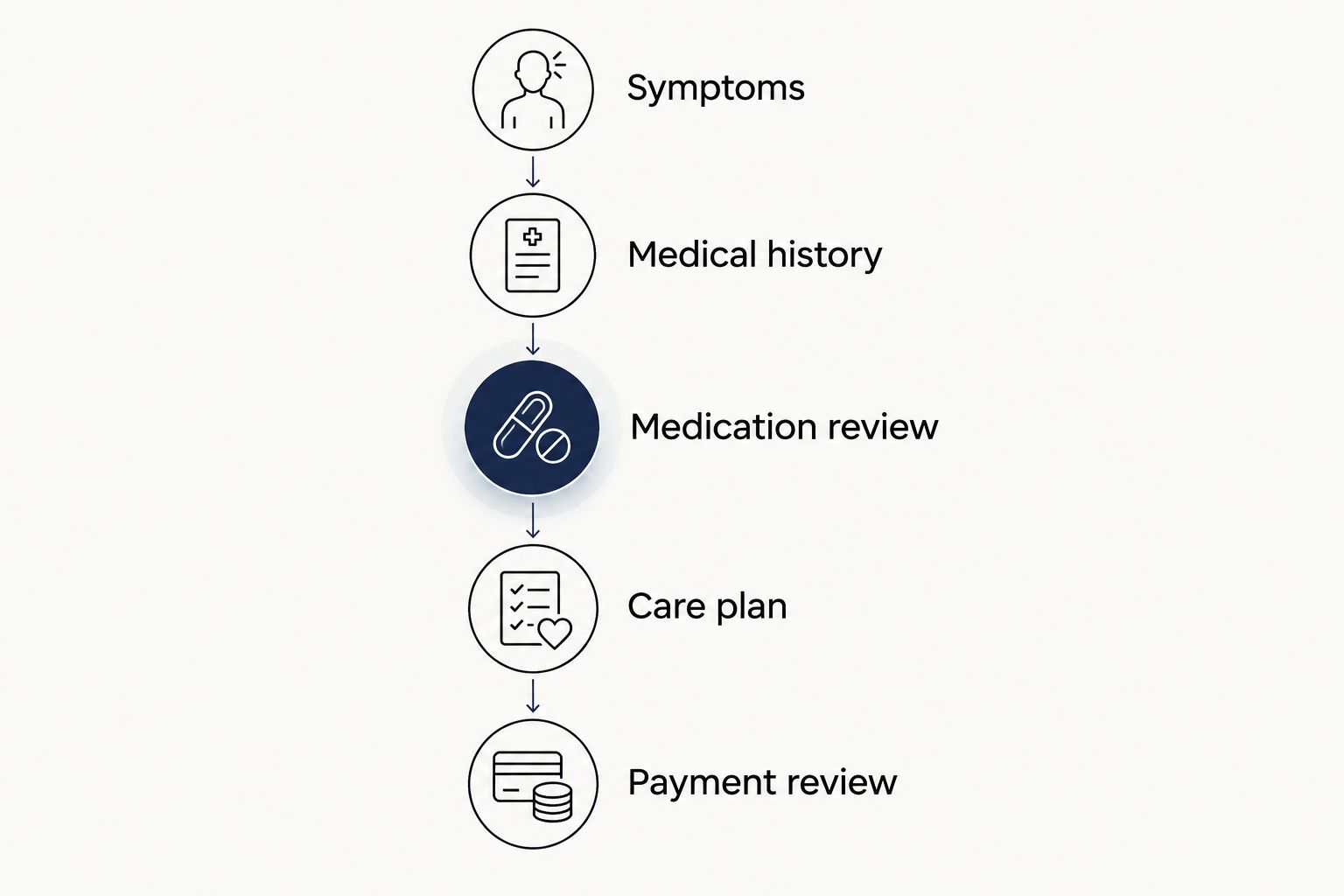
A useful 2026 consultation starts with a clear account of your symptoms, not a request for a particular prescription. Bring enough information for the clinician to decide whether remote care is appropriate.
- Symptoms: Explain what bothers you most, when it started and how it affects sleep, daily activity or sexual comfort.
- Medical history: Include your menstrual pattern, whether you have a uterus, previous surgery, cancer history, blood clots and unexplained bleeding.
- Medication review: List prescriptions, nonprescription products, supplements and any current hormones.
- Care plan: Ask what requires an examination, which tests have a specific purpose and how follow-up decisions are made.
- Payment review: Request the complete self-pay explanation, including what is billed separately and who supplies medication.
This information supports an individual decision. A hormone panel alone does not establish the best treatment for every menopausal symptom, and routine laboratory testing is not a substitute for clinical history.
Ask who you contact if symptoms persist or side effects develop. Direct provider access is useful, but it is not emergency care; severe chest pain, sudden shortness of breath or stroke-like symptoms require immediate emergency evaluation.
Discuss your women's health concerns
Ask about personalized assessment, remote appointment eligibility and the self-pay care plan.
Which hormone care option should you choose?
Choose a clinical assessment first, then match treatment to the symptom. For hot flashes, discuss whether systemic therapy is appropriate; for vaginal dryness alone, ask about local treatment before assuming you need systemic estrogen.
If your priorities are personalized care, convenient appointments and continuity, discuss the Bainshealth self-pay care model. Request clear pricing information before agreeing to care, and confirm that the provider can treat you where you are located.
Your 2026 decision should also include a follow-up plan. Ask what improvement would justify continuing treatment, what side effects require contact and what changes would prompt reassessment.
FAQ
What's the best online hormone replacement therapy for women?
The best option is a clinician-led plan matched to your symptoms, medical history and follow-up needs. Systemic treatment and low-dose vaginal treatment address different problems, so there is no single prescription that is best for every woman.
Is a hormone patch better than an estrogen pill?
Neither route is best for everyone. Transdermal estrogen avoids initial liver passage and can have a different clotting-risk profile, while oral treatment suits some eligible patients who prefer tablets.
Do I need progesterone with estrogen treatment?
Women with a uterus generally need protection of the uterine lining when using systemic estrogen. Low-dose vaginal estrogen is a different situation and generally does not require added progestogen; your clinician should confirm your individual plan.
Can vaginal estrogen help hot flashes?
Low-dose vaginal estrogen is not intended to treat hot flashes. It targets local vaginal and related urinary symptoms rather than providing systemic menopausal symptom treatment.
How much does online hormone care cost?
The total depends on the consultation, follow-up, medication and any indicated testing. Request an itemized self-pay explanation from the provider rather than assuming one charge includes every part of treatment.
Does Bainshealth accept insurance for hormone care?
Bainshealth currently operates as a self-pay practice and does not accept insurance. Patients pay the practice directly; do not assume reimbursement, medication coverage or laboratory coverage.
Can I book an online hormone appointment from Oregon?
Confirm Oregon eligibility before booking. The stated practice service area includes California, and remote treatment requires a clinician authorized to care for you where you are physically located.
Do I need hormone blood tests before treatment?
Not every menopausal symptom assessment requires hormone blood testing. The clinician should use your symptoms and medical history to decide whether a test answers a specific clinical question.
One last thing
Menopausal hormone therapy is not contraception. If pregnancy is still possible, discuss contraception separately rather than assuming a hormone prescription prevents pregnancy.
Before ending your consultation, ask one practical question: who remains responsible for reviewing the treatment if your symptoms, bleeding pattern or medical history changes? That answer matters as much as the initial prescription.