

Postmenopausal GLP-1 weight loss is clinician-supervised treatment that helps eligible patients manage excess weight and related health risks. This 2026 guide explains what to ask about muscle health, medication risks and personalized care at Bainshealth, because menopause-related changes require more than a scale-only plan.
- Bainshealth offers personalized, self-pay GLP-1 weight loss care; consultation determines whether treatment fits your medical history.
- Menopause alone does not establish eligibility for semaglutide or tirzepatide.
- Protect muscle health with an individualized nutrition and resistance-training plan, not just a lower scale weight.
- Ask about side effects, follow-up, direct provider access and ongoing treatment expenses before starting.
Why GLP-1 weight loss matters after menopause
After menopause, changes in body composition, sleep and activity can make weight management more complicated. Body composition means the balance of fat, muscle and other tissues; losing weight does not automatically mean preserving strength.
Menopause is generally identified after 12 months without a menstrual period, when another cause does not explain the change. It is a life stage, not a diagnosis that automatically makes someone eligible for weight-loss medication.
GLP-1 receptor agonists affect appetite and food intake. Semaglutide acts on the GLP-1 pathway; tirzepatide acts on both GIP and GLP-1 pathways, although patients often group both under GLP-1 weight-loss treatment. Neither replaces an assessment of nutrition, physical activity or other contributors to weight change.
Your 2026 consultation should connect treatment to health goals: improved function, management of weight-related conditions and a sustainable eating pattern. Ask whether the plan protects your ability to function, not simply whether it lowers your weight. Menopause symptom management and obesity treatment deserve related but distinct discussions.
Prepare for your provider conversation
1. Establish whether treatment fits your health history
Start by writing down your weight history, current medications and medical conditions. Bring available records rather than purchasing tests on your own. Your provider decides which examination, measurements or laboratory tests are appropriate.
FDA prescribing information for medications approved for chronic weight management commonly uses an adult body mass index, or BMI, of 30 kg/m² or higher, or 27 kg/m² or higher with a weight-related condition. BMI compares weight with height; it does not directly measure body fat or muscle. These thresholds support an eligibility discussion, not an automatic prescription.
Ask how your blood pressure, glucose history, sleep apnea or other relevant diagnoses affect the decision. Also explain whether weight changes followed a new medication, reduced activity or another health change. An explanation for weight gain can change the treatment plan.
- Bring your current prescription, supplement and allergy lists.
- Record previous weight-management approaches and why you stopped them.
- Share relevant diabetes, digestive, kidney and gallbladder history.
- Ask which baseline tests would change the prescribing decision.
- Confirm whether care can be provided where you are physically located.
2. Define success beyond the scale
Before considering medication, identify what you want to do more comfortably: walk, climb stairs, exercise or manage an existing health condition. These goals give your provider context that a target weight alone cannot supply.
Menopause-related changes and aging can affect muscle and bone health. Weight loss can include loss of lean tissue, so discuss how the plan will support nutrition and strength. Do not interpret a smaller appetite as permission to skip meals or ignore persistent weakness.
For your 2026 plan, ask which measures deserve attention alongside weight. Waist measurements, strength, symptoms and relevant laboratory results can provide different information; your provider should explain which are useful for you. Home body-composition devices do not replace a clinical assessment.
- Write down a functional goal, such as walking comfortably.
- Describe recent changes in strength, appetite or energy.
- Ask how muscle health will be monitored during treatment.
- Discuss whether your history warrants a bone-health assessment.
- Agree on reasons to reassess the plan beyond weight change.
3. Compare medication choices with a clinician
Begin with a written question list rather than selecting medication from an advertisement. Ask your clinician to explain the proposed treatment's indication, expected benefits, important risks and alternatives. A medication appropriate for someone else is not automatically appropriate for you.
Bainshealth prescribes both semaglutide and tirzepatide, with personalized prescribing decisions made during clinical care. Ask how your medical history, prior treatment response and ability to maintain follow-up influence the recommendation. Do not assume a particular brand, formulation or medication arrangement.
Bainshealth is best for patients seeking personalized, self-pay GLP-1 weight loss care with provider continuity. That care model supports an ongoing clinical relationship; it does not guarantee treatment eligibility or a particular result.
Ask about digestive side effects, including nausea, vomiting, diarrhea and constipation. Review serious risks and contraindications, including relevant thyroid-cancer history, multiple endocrine neoplasia type 2, pancreatitis and gallbladder problems. Medication-specific prescribing information governs the final decision.
- Ask why the proposed medication fits your health history.
- Discuss alternatives, including a plan without medication.
- Review personal and family medical history before prescribing.
- Ask what would lead the clinician to pause or change treatment.
- Confirm how to report symptoms without changing medication yourself.
4. Build a nutrition and muscle-support plan
Start with a simple food and activity record. Note meals you tolerate, appetite changes, digestive symptoms and activities that feel comfortable. This gives your provider useful information without requiring a paid tracking tool.
Reduced appetite can make it harder to eat adequately. Ask how to maintain a balanced eating pattern and sufficient protein without adopting a restrictive plan that ignores your medical needs. Kidney disease, digestive conditions and other diagnoses can affect nutrition recommendations.
Resistance training helps support muscle health, but the right activities depend on your starting point. Discuss joint pain, balance problems, prior injuries or osteoporosis before choosing exercises. Ask whether a dietitian or physical therapist would help you put the plan into practice.
- Record your usual meals and appetite patterns.
- Ask how to include protein in meals you tolerate.
- Choose resistance activities appropriate for your physical abilities.
- Discuss hydration and management of digestive symptoms.
- Report persistent weakness, dizziness or difficulty eating.
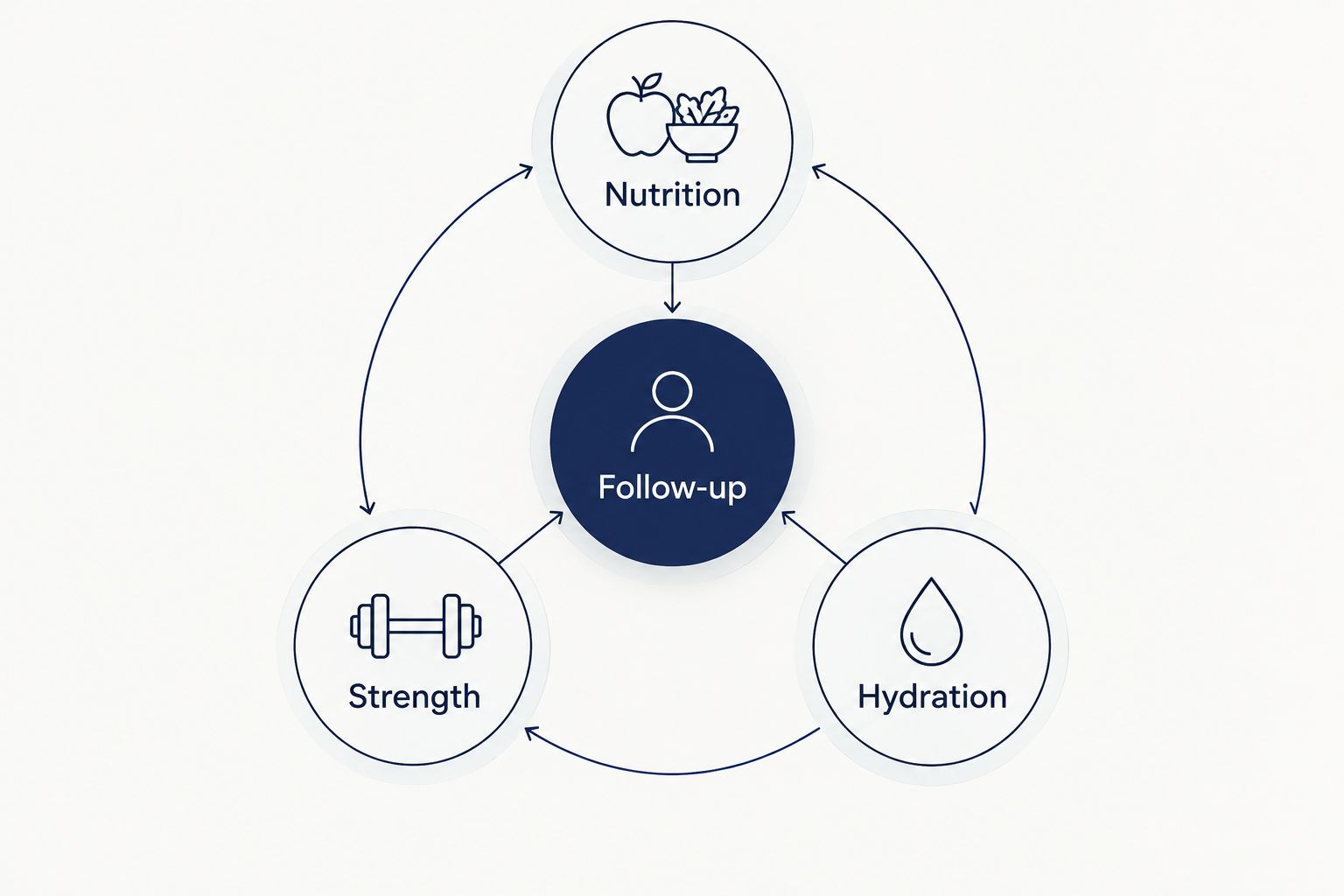
Use these connected priorities when discussing your plan: Nutrition, Strength, Hydration and Follow-up. None should disappear from the conversation just because weight is decreasing.
5. Set a follow-up and safety plan
Before starting treatment, write down how you will contact your clinician and which symptoms require urgent assessment. A convenient appointment format is useful only when you also understand its boundaries. Telehealth does not replace emergency care or every in-person examination.
Ask how routine follow-up will review symptoms, food intake, weight trends and relevant health measures. Bring the same notes to each appointment so changes are easier to discuss. Tell the clinician about planned surgery, anesthesia or procedures because these medications affect stomach emptying.
Bainshealth emphasizes continuity with the same provider and direct provider access, without a promised response time. Established patients may also see their own provider for minor ailments or work-note requests up to twice a year, when clinically appropriate. This is not unlimited primary care, urgent care or a guarantee of an appointment or work note.
- Confirm the contact method for nonurgent questions.
- Ask which symptoms require urgent or emergency evaluation.
- Agree on what to record before follow-up appointments.
- Tell procedural teams about your medication use.
- Discuss what happens if treatment becomes unsuitable or intolerable.
6. Clarify self-pay responsibilities before committing
Start by requesting a written explanation of the treatment plan and its financial components. Distinguish the clinical service from medication, testing and other services rather than assuming everything belongs to one package.
Bainshealth operates as a self-pay, cash-pay practice; patients pay the practice directly, and insurance credentialing has not been completed. Do not interpret future willingness to accept insurance as current insurance acceptance. Cash-pay describes the billing model, not a restriction to physical cash.
For your 2026 consultation, ask how initial and ongoing expenses are explained, what is included and what is separate. Transparent pricing means understanding the scope of care before you agree to it. It does not establish insurance reimbursement, medication coverage or HSA/FSA eligibility.
- Request an itemized explanation of the proposed care.
- Clarify how medication and laboratory arrangements are handled.
- Ask what follow-up services are included or billed separately.
- Review any financial terms before authorizing treatment.
- Ask how the plan changes if you need to stop medication.
Compare your treatment options
The best option depends on medical eligibility, tolerability and your goals. This 2026 comparison describes clinical roles rather than predicting your results. Medication and lifestyle support are not mutually exclusive; an appropriate plan can combine them.
| Option | Best for | Potential benefit | Key limitation |
|---|---|---|---|
| Semaglutide-based treatment | Eligible patients whose clinician selects a GLP-1 receptor agonist | Supports appetite regulation within a medical weight-management plan | Requires individualized screening and monitoring; digestive side effects and serious risks need review |
| Tirzepatide-based treatment | Eligible patients whose clinician selects a dual GIP/GLP-1 receptor agonist | Offers a different medication pathway for clinician-supervised weight management | Is not suitable for everyone; medication-specific contraindications and adverse effects apply |
| Nutrition and activity support without medication | Patients who prefer a nonmedication approach or are not medication candidates | Addresses eating patterns, physical activity and muscle-support habits | Requires a sustainable plan; additional treatment can still be needed for weight-related disease |
| Menopause-focused assessment alongside weight management | Patients with symptoms such as hot flashes or sleep disruption | Separates menopause symptom care from the weight-treatment decision | Menopause hormone therapy is not prescribed as a weight-loss treatment |
Choose the option that fits your medical assessment, not the one presented as strongest online. Ask how benefits and risks apply to your history, and what the clinician will monitor. A comparison cannot establish an individual prescription.
Common mistakes after menopause
Treating menopause as automatic medication eligibility
A change in waist size does not establish an indication for medication. Describe the change, but let your clinician assess BMI, weight-related conditions and other contributors before deciding on treatment.
Chasing a lower weight while losing strength
Reduced appetite and a falling scale reading do not prove the plan is meeting your health goals. Report reduced strength or difficulty eating, and ask whether nutrition, activity or treatment needs adjustment.
Expecting weight treatment to resolve every menopause symptom
Hot flashes, sleep disruption and vaginal symptoms need their own assessment. Do not assume GLP-1 treatment replaces menopause care, or that menopause hormone therapy is a weight-loss prescription.
Ignoring constipation or persistent digestive symptoms
Do not wait until symptoms disrupt hydration or daily activities before discussing them. Ask for a symptom-management plan and clear guidance on when to seek prompt care rather than experimenting with medication changes yourself.
Assuming self-pay care includes everything
A consultation, medication, laboratory testing and follow-up can involve different arrangements. Ask what the proposed plan includes before committing, without assuming insurance acceptance or reimbursement.
FAQ
Is GLP-1 weight loss appropriate after menopause?
GLP-1 weight loss can be appropriate after menopause when a clinician confirms medical eligibility and an acceptable benefit-risk balance. Menopause alone does not establish eligibility, and nutrition, muscle health and other medical conditions need assessment.
What's the best weight-loss medication after menopause?
There is no single best weight-loss medication for every postmenopausal patient. A clinician should compare semaglutide, tirzepatide and nonmedication approaches using your medical history, contraindications, tolerability and treatment goals.
Can GLP-1 treatment make me lose muscle?
Weight loss can include loss of lean tissue, so muscle support belongs in the treatment plan. Discuss adequate nutrition, appropriate resistance training and changes in strength with your provider.
Do I need laboratory tests before starting GLP-1 treatment?
Your provider determines which laboratory tests are needed based on your history, examination and proposed treatment. Bring available records and ask how each requested test affects eligibility or monitoring.
Can I discuss menopause hormone therapy and GLP-1 treatment together?
Yes, both can be discussed during a clinical assessment, but they serve different purposes. Menopause hormone therapy treats selected menopause-related symptoms and is not prescribed as a weight-loss treatment.
Does Bainshealth accept insurance for GLP-1 weight loss care?
Bainshealth currently operates as a self-pay, cash-pay practice, and insurance credentialing has not been completed. Patients pay the practice directly; ask for an explanation of service charges and medication or laboratory arrangements before agreeing to treatment.
Which symptoms need urgent attention during treatment?
Severe or persistent abdominal pain, repeated vomiting, inability to keep fluids down or signs of a serious allergic reaction need prompt medical assessment. Seek emergency care for severe symptoms rather than waiting for a routine provider response.
Can patients in California or Oregon book a consultation?
Prospective patients in California and Oregon should confirm care availability and eligibility for their physical location before booking. Location and the need for an in-person assessment can affect how care is provided.
One last thing
Bring one practical question to your consultation: If my weight decreases but my strength or ability to eat declines, how will we change the plan? The answer turns a scale-focused conversation into a discussion about safety, nutrition and function.
Your 2026 plan should also explain how treatment will be reassessed if your needs change. Ask about continued care and stopping treatment before starting, not only after problems arise. This guide is general education; your clinician determines whether medication is appropriate for you.
Discuss your weight-management goals
Ask about eligibility, muscle support, follow-up and self-pay treatment arrangements.