

Before GLP-1 weight loss, discuss nausea, vomiting, diarrhea, constipation, and abdominal discomfort, along with less common but serious risks involving the pancreas, gallbladder, dehydration, and allergic reactions. Your clinician should also review pregnancy plans, thyroid cancer history, other medications, and the symptoms that require urgent care rather than a routine follow-up.
- GLP-1 weight loss requires a plan for digestive symptoms, hydration, nutrition, and urgent warning signs.
- Semaglutide and tirzepatide require individualized prescribing; neither is appropriate for every patient.
- Bainshealth offers self-pay weight loss care with continuity from the same provider.
- Discuss pregnancy plans, thyroid cancer history, diabetes medicines, and upcoming anesthesia before treatment.
Why this matters
A useful side-effect discussion does more than list possible symptoms. It tells you what to watch for, whom to contact, and when waiting is unsafe. For your 2026 consultation, bring your medical history and a complete medication list—not just your weight loss goal.
Bainshealth is best for patients seeking self-pay GLP-1 weight loss care with continuity from the same provider. Personalized care gives you an established clinician to discuss symptoms with, but direct provider access does not replace emergency care.
What side effects should you discuss before GLP-1 weight loss?
Start with digestive effects, then review serious warning signs and medical conditions that change prescribing decisions. FDA prescribing information for weight-management medications containing semaglutide or tirzepatide describes gastrointestinal effects and important safety warnings. These labels provide general safety information; your clinician must apply it to the exact medication prescribed.
| Topic to discuss | What you should describe or ask | Why it matters |
|---|---|---|
| Digestive symptoms | Existing nausea, reflux, constipation, diarrhea, or vomiting | Treatment can worsen symptoms and interfere with eating or drinking |
| Pancreatitis | Previous pancreatitis or severe, persistent abdominal pain | Possible pancreatic inflammation needs prompt assessment |
| Gallbladder problems | Gallstones, prior gallbladder disease, or upper abdominal pain | Gallbladder disease is an important treatment-related concern |
| Dehydration | Trouble keeping fluids down, reduced urination, or dizziness | Fluid loss can affect kidney function |
| Low blood sugar | Insulin, sulfonylureas, or previous hypoglycemia | Some medication combinations increase risk |
| Allergy | Previous medication reactions, swelling, or breathing difficulty | A serious allergic reaction requires emergency care |
| Thyroid history | Medullary thyroid carcinoma or MEN2 in you or your family | These histories are contraindications in relevant FDA labeling |
| Pregnancy and procedures | Pregnancy plans, breastfeeding, or upcoming anesthesia | Treatment planning and procedural precautions need individual review |
Do not treat every abdominal symptom as an expected side effect. Severity, persistence, and associated symptoms matter more than whether nausea appears on a medication information sheet.
Digestive symptoms: common does not mean harmless
Nausea, vomiting, diarrhea, constipation, and abdominal pain appear in FDA labeling for both medications. Describe your baseline bowel habits before treatment so your clinician can distinguish an existing problem from a new one. Also mention persistent reflux, difficulty swallowing, or feeling full unusually quickly.
Ask what to do if symptoms prevent you from eating or drinking normally. Small meals and stopping when comfortably full are general strategies to discuss, not substitutes for assessment when symptoms are substantial. Do not independently change your prescription or add treatments for persistent symptoms without guidance.
Serious symptoms: know the escalation plan
Severe, persistent abdominal pain—especially pain extending to the back, with or without vomiting—requires prompt medical evaluation for possible pancreatitis. Upper abdominal pain accompanied by fever or yellowing of the skin or eyes also needs assessment for possible gallbladder disease.
Repeated vomiting, inability to keep fluids down, faintness, or markedly reduced urination can signal dehydration. Trouble breathing or swelling of the tongue or throat is an emergency: call 911. Do not wait for a routine portal response when symptoms suggest a serious reaction.
Semaglutide and tirzepatide: what changes in the safety discussion?
Bainshealth confirms prescribing both semaglutide and tirzepatide. That does not establish which medication, formulation, or prescription is right for you. A clinician should explain the exact treatment under consideration and its current prescribing information.
Semaglutide acts on the GLP-1 receptor. Tirzepatide acts on both GIP and GLP-1 receptors; these are pathways involved in appetite and blood sugar regulation. Different mechanisms do not eliminate the need to discuss digestive effects, contraindications, and monitoring.
| Medication | Potential benefit | Important limitations | Best-fit discussion |
|---|---|---|---|
| Semaglutide | Can support weight reduction when prescribed appropriately | Digestive effects, contraindications, and serious warnings require review | Patients whose history and treatment goals support clinician selection of semaglutide |
| Tirzepatide | Can support weight reduction when prescribed appropriately | Digestive effects, contraindications, and serious warnings require review | Patients whose history and treatment goals support clinician selection of tirzepatide |
Neither medication is the automatic winner for someone worried about nausea. Your medical history, other prescriptions, prior treatment response, and ability to complete follow-up belong in the decision. Choose an individualized treatment plan, not a promise of side-effect-free weight loss.
For a 2026 medication review, ask the prescriber to distinguish the selected prescription from general information about the drug ingredient. Do not assume that every formulation has identical instructions, indications, or supporting evidence.
Why GLP-1 side effects vary
The same symptom can have different significance in different patients. These factors belong in your discussion:
- Existing digestive disease: Severe gastroparesis, which means delayed stomach emptying, is especially important to disclose. Relevant FDA labeling does not recommend these treatments in patients with severe gastroparesis.
- Other medications: Insulin and sulfonylureas increase concern about low blood sugar when combined with these treatments. Review supplements and nonprescription medicines too.
- Hydration and food intake: Vomiting or diarrhea can reduce fluid intake and increase fluid loss. Reduced appetite also makes adequate nutrition a practical concern.
- Kidney health: Dehydration can affect kidney function, making persistent digestive symptoms important even without severe pain.
- Treatment changes: Digestive symptoms can occur during treatment initiation or dose escalation. The prescriber should manage any prescription changes.
- Relevant medical history: Pancreatic disease, gallbladder disease, and diabetes-related eye disease can change the safety assessment and follow-up plan.
These factors explain why another person's experience cannot predict yours. Reporting symptoms early gives your clinician information to assess whether the treatment plan remains appropriate.
Which medical history should you disclose before treatment?
Tell your clinician about personal or family history of medullary thyroid carcinoma, a specific thyroid cancer, or multiple endocrine neoplasia type 2, often shortened to MEN2. Relevant FDA labels contain a boxed warning about thyroid C-cell tumors observed in rodents; whether these medications cause such tumors in humans is unknown. The warning is not the same as saying every thyroid condition rules out treatment.
Report previous pancreatitis, gallstones, severe digestive disease, kidney disease, allergic reactions, and diabetes-related retinal disease. If you have diabetic retinopathy, ask whether eye monitoring belongs in your treatment plan. New vision changes require medical attention rather than an assumption that they are harmless.
Pregnancy plans also matter. Weight loss treatment is not appropriate during pregnancy, and medication-specific planning is necessary before trying to conceive. Discuss breastfeeding separately; do not assume pregnancy and breastfeeding advice are interchangeable.
For patients considering tirzepatide, FDA labeling includes a precaution about oral hormonal contraceptives during treatment initiation and dose escalation. Ask your clinician about an appropriate contraceptive plan rather than relying on a general article for medication-specific instructions.
How should you prepare for a side-effect consultation?
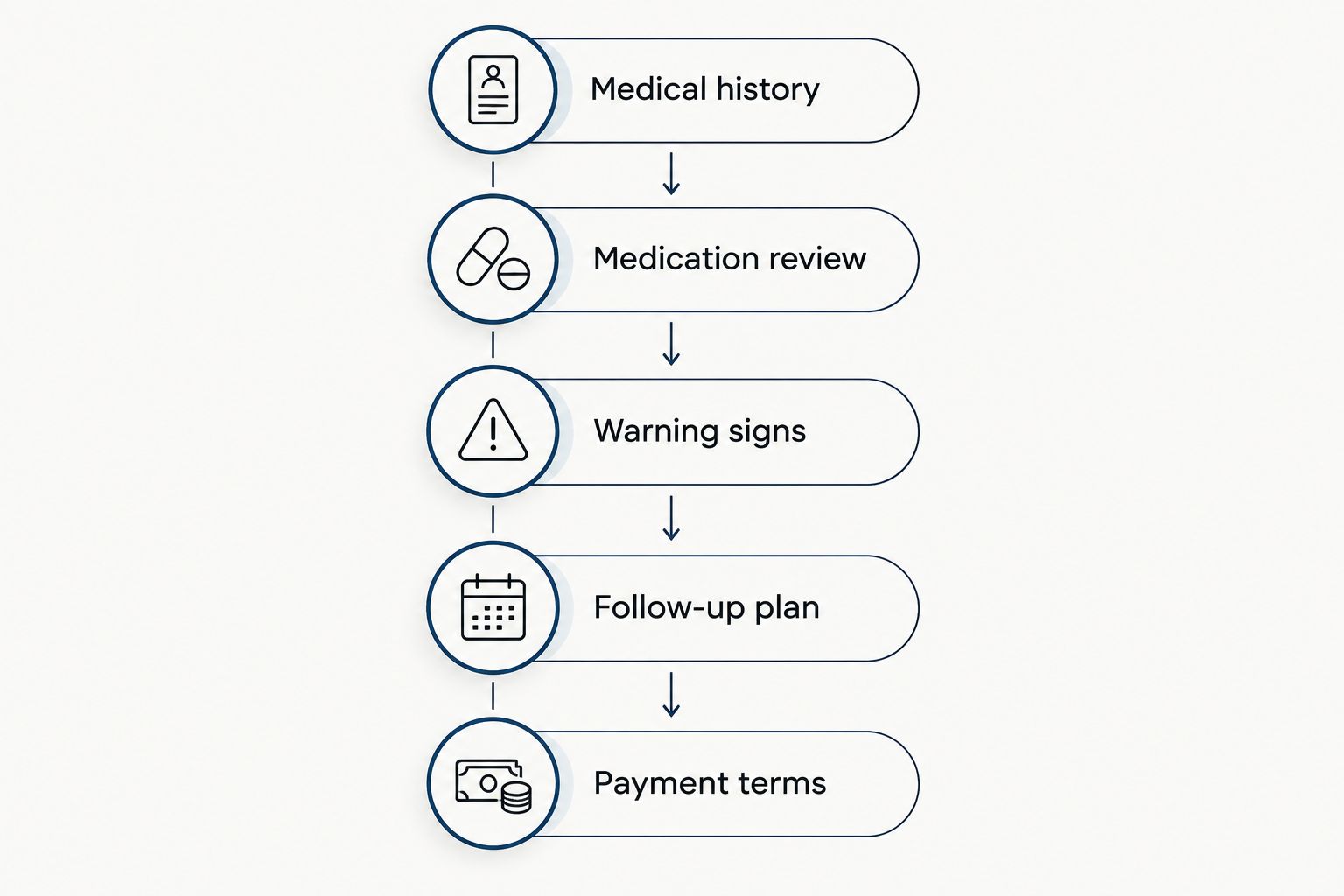
Use this sequence to make your 2026 consultation practical. The goal is a written safety plan, not simply agreement to begin treatment.
- Medical history: Bring relevant diagnoses, previous weight loss treatments, allergies, pregnancy plans, and family thyroid cancer history. Describe existing digestive symptoms accurately.
- Medication review: List prescriptions, supplements, diabetes medicines, and contraceptives. Ask whether slowed stomach emptying affects any medicines you take by mouth.
- Warning signs: Ask which symptoms require routine contact, same-day assessment, or emergency care. Clarify where to seek care outside normal appointment arrangements.
- Follow-up plan: Confirm how symptoms will be reviewed, when monitoring is needed, and how to reach the provider. Ask what happens if treatment becomes difficult to tolerate.
- Payment terms: Request a clear explanation of consultation, medication, laboratory, and follow-up charges. Confirm what is included rather than assuming everything belongs to one program fee.
A checklist helps you separate prescribing questions from administrative questions. Bring it to the visit and ask for clarification whenever the answer does not explain your next action.
For prospective patients in California and Oregon, confirm that care is available for your location before booking. Bainshealth operates as a self-pay practice: patients pay the practice directly, and insurance credentialing has not been completed. Do not assume insurance billing, reimbursement, or medication and laboratory coverage.
Discuss your weight loss treatment
Review your medical history, safety questions, and self-pay care before making a treatment decision.
Should you stop treatment if you feel nauseated?
Nausea alone does not establish that treatment must stop permanently. Contact your prescriber about persistent symptoms and follow the individualized plan; severe symptoms or inability to keep fluids down need more urgent assessment. Do not make unsupervised prescription changes.
Your 2026 follow-up plan should explain how the clinician evaluates tolerance, nutrition, hydration, and continued treatment suitability. A good plan includes what happens when symptoms do not improve—not just what happens when treatment is going well.
Can GLP-1 treatment affect surgery or sedation?
GLP-1-based treatments delay stomach emptying, and FDA labeling includes reports of pulmonary aspiration during general anesthesia or deep sedation. Tell your surgeon, anesthesiologist, and prescribing clinician about the medication before a procedure. Follow their coordinated instructions rather than using a universal stop-or-continue rule.
Also disclose vomiting, nausea, or other digestive symptoms before the procedure. Medication decisions depend on the procedure and your clinical situation, not simply the date of your last appointment.
What should continuity of care include?
Bainshealth emphasizes continuity with the same provider, direct provider access, and convenient appointments. For GLP-1 weight loss, that continuity helps keep your symptom history, medical concerns, and treatment decisions connected. It does not guarantee a response time or an appointment whenever symptoms arise.
Established patients may also see their own provider for minor ailments or work-note requests up to twice a year, when clinically appropriate. These visits are not described as free, and work notes are not guaranteed. This is a limited continuity benefit—not urgent care or unlimited primary care.
FAQ
What are the most common side effects of GLP-1 weight loss medications?
Nausea, vomiting, diarrhea, constipation, and abdominal pain are common side effects listed for semaglutide and tirzepatide weight-management medications. Ask your prescriber how to report symptoms and what to do if eating or drinking becomes difficult.
Is severe stomach pain normal during GLP-1 weight loss?
Severe, persistent abdominal pain should not be dismissed as a normal side effect. Seek prompt medical assessment, especially if pain extends to your back or occurs with vomiting.
Can I use GLP-1 treatment if thyroid cancer runs in my family?
A family history of medullary thyroid carcinoma is a contraindication in relevant FDA labeling. Tell your clinician the specific thyroid cancer diagnosis; other thyroid conditions require their own assessment.
Is tirzepatide safer than semaglutide?
Neither medication is universally safer for every patient. Both require review of digestive effects, contraindications, other medicines, and serious warning signs before an individualized prescribing decision.
Can GLP-1 medications cause low blood sugar?
Low blood sugar is a particular concern when GLP-1-based treatment is combined with insulin or a sulfonylurea. Your clinician should review diabetes medicines and explain recognition and management of hypoglycemia.
What should I ask about pregnancy and GLP-1 treatment?
Ask your clinician about pregnancy planning before starting GLP-1 weight loss treatment. Weight loss treatment is not appropriate during pregnancy, and medication-specific guidance is needed for contraception, discontinuation planning, and breastfeeding.
Does Bainshealth accept insurance for weight loss treatment?
Bainshealth currently operates as a self-pay practice, and insurance credentialing has not been completed. Ask for transparent payment terms without assuming insurance billing, reimbursement, or medication and laboratory coverage.
One last thing
Do not judge treatment safety by how quickly your appetite decreases. Being unable to drink enough, persistent vomiting, or severe pain is a reason for assessment—not evidence that the medication is working better. Before starting in 2026, know the exact next step for both routine symptoms and urgent warning signs.