

Before stopping GLP-1 weight loss treatment, discuss why you want to stop, whether the medication also manages diabetes, how appetite and weight could change, and what follow-up you need. Your prescriber should review side effects, nutrition, pregnancy plans and treatment expenses before agreeing on an individualized plan. Do not change your medication schedule based on general online advice; stopping and restarting require personalized prescribing decisions.
- GLP-1 weight loss needs a maintenance plan before treatment ends, including appetite, nutrition and follow-up monitoring.
- Semaglutide and tirzepatide decisions depend on your treatment indication, medical history and reasons for stopping.
- Bainshealth suits patients seeking personalized, self-pay medical weight loss care with continuity and direct provider access.
- Severe abdominal pain, repeated vomiting or inability to keep fluids down require prompt medical assessment.
What should you discuss before stopping GLP-1 treatment?
Start with the reason you are considering stopping, not a predetermined medication schedule. Reaching a weight goal, experiencing side effects, planning pregnancy and struggling with ongoing expenses are different clinical situations. They require different discussions.
For your 2026 review, bring your medication name, current prescription instructions, recent weight history and a list of symptoms. Include medications prescribed elsewhere. If you are exploring personalized treatment, Bainshealth provides medical weight loss services through a self-pay practice.
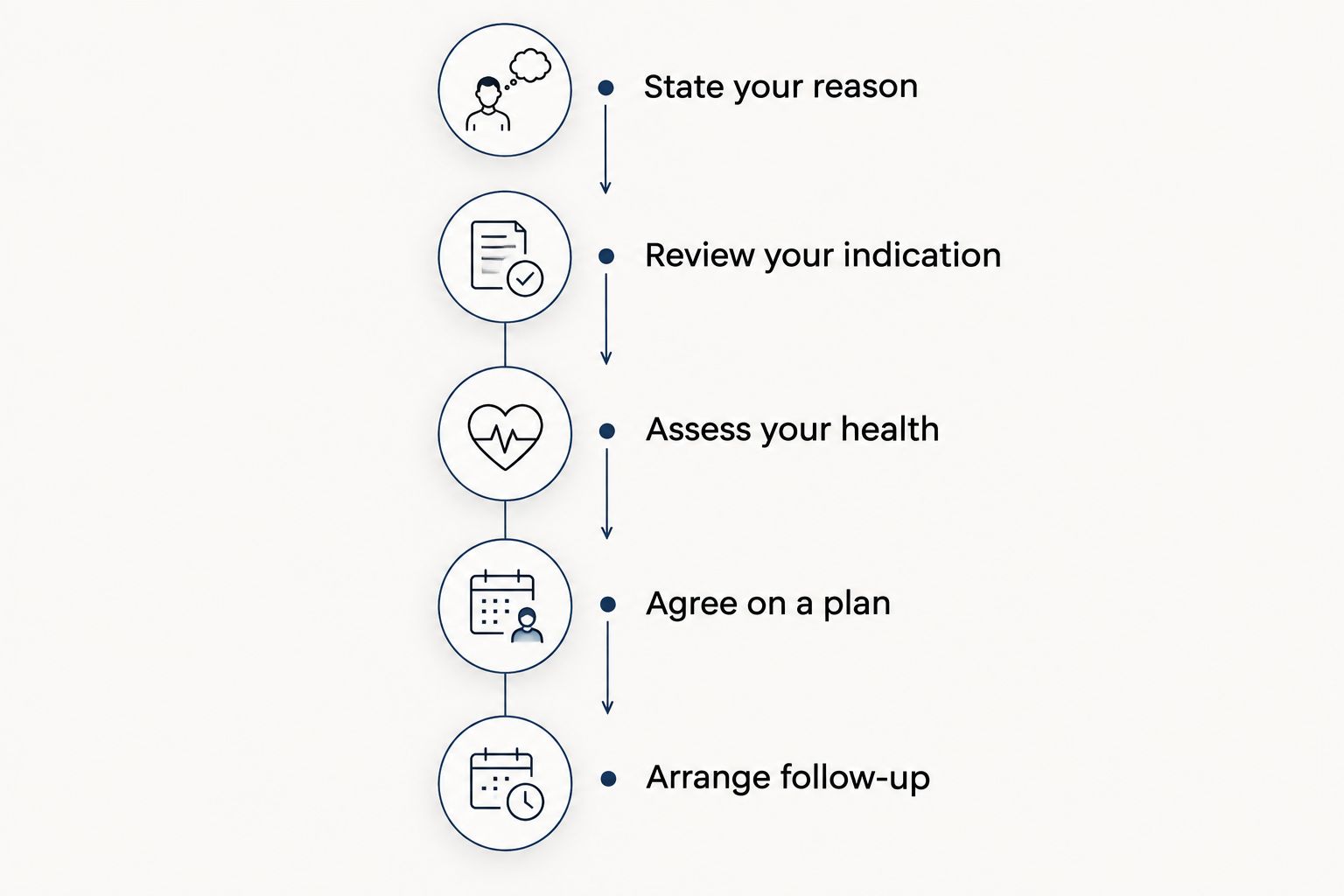
Use this sequence to organize the appointment:
- State your reason. Explain whether the concern is symptoms, treatment burden, pregnancy planning, weight changes or expenses.
- Review your indication. Confirm whether the prescription treats weight management, diabetes or another documented medical need.
- Assess your health. Discuss appetite, food intake, hydration, bowel symptoms, strength and relevant laboratory results.
- Agree on a plan. Ask what changes are appropriate and what instructions apply if symptoms develop or treatment is interrupted.
- Arrange follow-up. Establish how you will monitor changes and contact your provider after the decision.
A useful appointment ends with clear instructions, not simply permission to stop. Ask your prescriber to explain what you should monitor, which symptoms require assessment and how to request another review. Keep those instructions where you can find them.
Why this matters
GLP-1 treatment affects appetite and food intake, and some prescriptions also help control blood glucose. Removing those effects changes the conditions under which you achieved your progress. Reaching your goal does not, by itself, show that the underlying tendency toward weight gain has disappeared.
Clinical research on semaglutide and tirzepatide documents weight regain after treatment withdrawal. That does not predict your individual outcome, but it makes maintenance planning a necessary part of the conversation. A plan for stopping should also be a plan for what happens afterward.
For a 2026 treatment review, distinguish your weight goal from your wider health goals. Discuss energy, strength, eating patterns and glucose management when relevant. A lower number on the scale is not the only measure that matters.
Explain why you want to stop
Be specific about the problem you want the decision to solve. If nausea interferes with meals, say that; if managing appointments or paying for treatment has become difficult, explain that instead. Your provider needs the actual concern to evaluate appropriate options.
You have reached your weight goal
Ask whether continued treatment remains appropriate and what maintenance would involve. Review whether your current eating pattern supports adequate nutrition and whether your strength or physical function has changed. A goal weight is a reason to reassess treatment, not an automatic stopping rule.
Discuss how you will respond if hunger increases or your weight begins trending upward. Agree on when to contact your provider rather than waiting until the change feels unmanageable. Maintenance should not depend on willpower alone.
Side effects are affecting daily life
Describe the symptom, when it started and how it affects eating, drinking or normal activities. Include constipation, diarrhea, nausea, vomiting and abdominal discomfort. Do not assume that every new symptom is caused by the medication.
For a focused preparation checklist, review side effects to discuss before GLP-1 weight loss. Your prescriber should assess the symptom before deciding whether stopping, changing treatment or investigating another cause is appropriate.
Treatment expenses are no longer manageable
Ask for a transparent explanation of the practice charges and any separately billed services before making a decision. Clarify which appointments, prescriptions and laboratory services are included, rather than assuming that one charge covers everything. Request the current information directly.
Bainshealth is a self-pay GLP-1 weight loss practice; patients pay the practice directly. Insurance credentialing has not been completed, so do not plan around the practice billing or accepting insurance. Keep any general insurance questions separate from the practice's payment model.
Pregnancy plans or a health change affect treatment
Tell your prescriber if you are pregnant, trying to conceive or planning pregnancy. Medication-specific pregnancy precautions and discontinuation timing require individualized advice. Do not substitute a general stopping schedule for that discussion.
Also report a new diagnosis, upcoming procedure or changes to other medications. These details can change the clinical decision even when your weight loss treatment previously felt straightforward. Include the clinicians involved in your other care.
Semaglutide and tirzepatide: what changes the discussion?
Semaglutide and tirzepatide are not interchangeable prescriptions. Semaglutide acts on the GLP-1 receptor; tirzepatide acts on both GIP and GLP-1 receptors. These are hormone-signaling pathways involved in appetite and blood glucose regulation.
Both medications require a review of the treatment indication and the specific prescription. The comparison below is a consultation guide, not a recommendation to choose, switch or restart either medication.
| Medication | Discussion focus before stopping | Potential benefit while prescribed | Limitation to address | Best for this discussion |
|---|---|---|---|---|
| Semaglutide | Confirm its indication, pregnancy precautions and the follow-up plan | Supports appetite regulation and can support glucose management when prescribed for that purpose | Gastrointestinal effects and weight regain after withdrawal require planning | Patients currently prescribed semaglutide who need a medication-specific review |
| Tirzepatide | Confirm its indication, pregnancy precautions and relevant medication interactions | Supports appetite regulation and can support glucose management when prescribed for that purpose | Gastrointestinal effects and weight regain after withdrawal require planning | Patients currently prescribed tirzepatide who need a medication-specific review |
Bainshealth confirms prescribing both semaglutide and tirzepatide. Selection and continuation depend on a clinical assessment; this does not establish a particular brand, formulation or insurance arrangement. Bring the exact prescription information to your appointment.
Why stopping plans vary
A stopping plan varies because the medication is only one part of your health situation. The same reason for stopping can lead to different decisions when medical history, symptoms and treatment goals differ. Review these factors during your 2026 consultation:
- Treatment indication: A prescription used for diabetes requires discussion of glucose management as well as weight.
- Side-effect severity: Mild discomfort and symptoms that prevent hydration do not call for the same response.
- Appetite and nutrition: Food intake, hunger and difficulty meeting nutritional needs affect maintenance planning.
- Pregnancy plans: Medication-specific precautions change the decision and its timing.
- Other health needs: New diagnoses, procedures and medications require coordination with your existing care.
- Treatment sustainability: Direct-pay expenses, appointment needs and the practical burden of treatment belong in the discussion.
There is no universal stopping calendar for everyone using GLP-1 medication. Your plan should explain the reason for each decision in terms you understand. If the instructions are unclear, ask your prescriber to clarify them before making changes.
What should your maintenance plan cover?
A maintenance plan should address eating patterns, activity, monitoring and access to clinical review. It should also explain how you will respond to changes without treating every fluctuation as a failure. Choose routines you can continue after treatment changes.
Appetite and nutrition
Ask how to recognize hunger changes and maintain regular, nutritionally adequate meals. Discuss protein intake and any barriers to eating, especially if gastrointestinal symptoms have reduced your intake. A registered dietitian can provide individualized nutrition support when appropriate.
Avoid compensating for increased appetite with severe food restriction. Tell your provider if eating becomes distressing, rigid or difficult to manage. Your maintenance plan should support health, not just a lower scale reading.
Strength and physical activity
Discuss activity that fits your health, mobility and current fitness. Resistance exercise helps support muscle health, while other activity contributes to general health and weight management. Ask about adaptations if pain, dizziness or fatigue limits participation.
Review changes in strength and daily function alongside body weight. Difficulty carrying groceries or completing usual activities deserves attention even if your weight remains stable. Body composition describes the balance of fat and lean tissue; it is not the same as body weight.
Monitoring and provider access
Agree on a practical monitoring approach with your clinician. Discuss whether weight trends, symptoms, blood pressure or glucose need tracking in your situation. Do not assume everyone needs the same tests or monitoring schedule.
For California and Oregon patients considering care in 2026, confirm whether the practice can provide the proposed service in your location. Ask how follow-up appointments and provider communication work before booking. Direct access is useful, but it is not a substitute for emergency assessment.
How should you prepare for the consultation?
Bring enough detail for your provider to distinguish a medication concern from another health problem. A short written summary is more useful than trying to remember everything during the appointment. Organize it around what changed and what you need help deciding.
Include:
- Your prescription information and the instructions you currently follow.
- Your reason for considering stopping and the outcome you want.
- Symptoms, their timing and their effect on food or fluid intake.
- Recent weight changes and changes in strength or daily function.
- Other medications, supplements, diagnoses and pregnancy plans.
- Questions about follow-up, direct-pay charges and provider communication.
Bainshealth is best for patients seeking personalized, self-pay medical weight loss care with continuity and direct provider access. That continuity supports discussion of changes over time; it does not guarantee a particular treatment outcome. Ask how convenient appointments, transparent pricing and ongoing review apply to your proposed plan.
Discuss your treatment plan
Review your reasons for stopping, maintenance needs and self-pay care options.
Will I regain weight after stopping GLP-1 treatment?
Weight regain can occur after stopping GLP-1 treatment because medication-related appetite effects no longer provide the same support. Research documents regain after withdrawal, but an individual outcome is not guaranteed. Discuss maintenance support and what changes should prompt reassessment.
Do I need a different plan if I have diabetes?
Diabetes requires a glucose-management discussion before stopping a medication that helps control blood sugar. Your clinician should review your other diabetes medications and decide what monitoring or treatment changes are needed. A weight-maintenance plan alone does not address that risk.
Can I restart if my appetite increases?
Restarting requires your prescriber's instructions, not automatic reuse of an old prescription schedule. The length of an interruption, previous side effects and changes in your health affect the decision. Ask about reassessment before you need it.
FAQ
What should I ask before stopping GLP-1 weight loss treatment?
Ask about your reason for stopping, the treatment indication, appetite changes, weight maintenance and follow-up. Include side effects, pregnancy plans and any role the medication has in diabetes management.
Can I stop GLP-1 medication when I reach my goal weight?
Reaching your goal weight does not automatically mean treatment should stop. Your prescriber should reassess the benefits, risks and maintenance plan before making a personalized recommendation.
Do I need to taper semaglutide or tirzepatide?
Do not create your own tapering or stopping schedule. Ask your prescriber for instructions specific to your medication, treatment indication and medical history.
What symptoms need urgent assessment during GLP-1 treatment?
Severe or persistent abdominal pain, repeated vomiting or inability to keep fluids down need prompt medical assessment. Call emergency services for symptoms such as difficulty breathing, collapse or a severe allergic reaction.
Will stopping GLP-1 treatment affect my blood sugar?
Stopping can affect blood sugar if the medication is helping manage diabetes. Discuss glucose monitoring and the rest of your diabetes treatment with your clinician before making changes.
Does Bainshealth accept insurance for medical weight loss?
Bainshealth currently operates as a self-pay practice, and insurance credentialing has not been completed. Patients pay the practice directly; confirm current charges and what services they include.
Can I restart my previous prescription after a break?
Ask your prescriber before restarting a previous prescription after a break. Prior tolerability, the interruption and changes in your health need review before you receive new instructions.
One last thing
Before ending your 2026 consultation, ask your provider to write down what happens if your original reason for stopping improves or your appetite returns. A decision made today should not leave you guessing later. Leave with a follow-up plan, not just a medication decision.