

Before GLP-1 weight loss treatment, your clinician may review an A1c or fasting glucose, kidney function, liver tests and a lipid panel; thyroid or pregnancy testing depends on your history and circumstances. There is no universal lab panel that clears everyone for treatment, and normal results do not replace a review of medications, pregnancy plans and medical contraindications.
- GLP-1 weight loss lab testing should answer specific clinical questions, not follow an identical checklist for everyone.
- A1c, kidney function, liver tests and cholesterol can establish a useful baseline for medical weight loss.
- Thyroid and pregnancy testing depend on symptoms, medical history and pregnancy potential.
- Bainshealth offers personalized, self-pay care; ask how laboratory testing fits into your consultation and follow-up plan.
What lab tests might you need before GLP-1 weight loss?
The useful tests are those that clarify your metabolic health, identify conditions needing attention or help your provider plan monitoring. Bring existing results to your consultation rather than assuming every test needs repeating.
| Test or panel | Best for answering | What it assesses | Important limitation |
|---|---|---|---|
| A1c | Longer-term glucose assessment | Average blood sugar over approximately 3 months | Certain blood disorders and other conditions affect accuracy |
| Fasting glucose | Current fasting glucose assessment | Blood sugar after fasting | A single result does not always establish a diagnosis |
| Comprehensive metabolic panel | Kidney, liver and electrolyte baseline | Creatinine, estimated kidney filtration, electrolytes and liver-related markers | Abnormal findings need interpretation, not automatic exclusion |
| Lipid panel | Cardiovascular risk assessment | Cholesterol and triglycerides | It does not determine medication suitability by itself |
| Thyroid-stimulating hormone, or TSH | Investigating suspected thyroid dysfunction | Signals used to assess thyroid function | It is not a thyroid cancer screening test |
| Pregnancy test | Clarifying pregnancy status when relevant | Evidence of pregnancy | A negative result does not replace discussion of pregnancy plans |
Why this matters
For a GLP-1 weight loss consultation in 2026, the goal is not simply to collect normal numbers. It is to understand what those numbers mean alongside your symptoms, health history and current treatment.
Bainshealth is best suited to patients seeking personalized, self-pay GLP-1 weight loss care with continuity from the same provider. You can discuss that approach through Bainshealth, including direct provider access and how testing fits your individual care plan.
A baseline can reveal diabetes, kidney impairment or another condition that changes your care. It can also provide a reference for later assessment. Neither purpose means that every patient needs an extensive panel or that every abnormal result prevents treatment.
A1c and fasting glucose: understanding your starting point
A1c reflects average blood glucose over approximately 3 months. It helps your clinician assess whether diabetes or prediabetes needs attention alongside weight management, rather than treating body weight as the only health measure.
Fasting glucose answers a different question: what your blood sugar is at the time of the test after fasting. Your clinician decides whether one test, both tests or existing results are appropriate. Do not fast unless your laboratory or provider instructs you to do so.
An A1c of 6.5% or higher or fasting plasma glucose of 126 mg/dL or higher meets a laboratory threshold used to diagnose diabetes. In the absence of unequivocal hyperglycemia, diagnosis generally requires confirmation with another abnormal result. These thresholds identify a condition to evaluate; they are not automatic approval or rejection criteria for weight-loss medication.
Tell your provider if you take insulin or other medications that lower blood sugar. Medication review matters because some combinations increase the risk of low blood sugar, even when your baseline glucose results look satisfactory.
Kidney function and electrolytes: planning for dehydration risk
Kidney assessment commonly involves creatinine and estimated glomerular filtration rate, often reported as eGFR. A metabolic panel also measures electrolytes, which help regulate fluid balance, nerve function and muscle activity.
These results matter because nausea, vomiting or diarrhea can reduce fluid intake and cause dehydration during treatment. Dehydration can worsen kidney function. Your provider needs to know about existing kidney disease, recent illness and medications that affect fluid balance.
An abnormal kidney result needs clinical interpretation, not a blanket treatment decision. It can prompt repeat testing, evaluation of the cause or a different monitoring plan. A normal baseline also does not eliminate the need to report persistent vomiting, difficulty drinking or substantially reduced urination.
Ask what symptoms should trigger contact with your provider and when repeat kidney testing would be appropriate. A useful plan connects laboratory monitoring to your actual risks rather than promising an identical schedule for everyone.
Liver tests and cholesterol: looking beyond the scale
Liver-related tests can identify abnormalities that need further assessment. Elevated liver enzymes have several possible causes, including metabolic liver disease, medications and other medical conditions. The result alone does not establish the cause.
Your clinician should interpret liver results alongside your history, symptoms and any prior evaluation. Normal enzymes do not rule out every liver condition, and an elevated value does not automatically make GLP-1 treatment unsuitable.
A lipid panel measures cholesterol and triglycerides. It helps assess cardiovascular risk and identify issues that deserve attention independently of weight loss. Improving your overall health requires attention to these findings, not just changes in body weight.
For your 2026 consultation, bring previous liver and cholesterol results if you have them. Trends provide context: a longstanding finding and a new change require different questions, even when the latest numbers appear similar.
Thyroid and pregnancy tests: when targeted testing matters
TSH testing is useful when your symptoms or history suggest thyroid dysfunction. For example, unexplained fatigue, cold intolerance or a known thyroid condition can justify further evaluation. Weight gain alone does not establish a thyroid diagnosis.
A normal TSH does not screen out every thyroid-related contraindication. For commonly prescribed GLP-1-based weight-loss medications, a personal or family history of medullary thyroid carcinoma or multiple endocrine neoplasia type 2 requires specific discussion. TSH measures thyroid function; it does not clear those histories.
Pregnancy testing is relevant when pregnancy status needs clarification. Weight-loss medications are not used for weight loss during pregnancy, so pregnancy plans and contraception belong in the consultation even if a test is negative.
Tell your provider if you are pregnant, breastfeeding or planning pregnancy. Medication-specific advice matters, including when treatment should stop before a planned pregnancy. Do not make that decision from a generic testing checklist.
Why your pre-treatment testing varies
Your 2026 laboratory plan should reflect clinical questions that apply to you. The following factors help determine which tests are useful and whether existing results are sufficient:
- Existing diagnoses: Diabetes, kidney disease, liver disease and thyroid disorders change what your clinician needs to assess.
- Current medications: Insulin, other glucose-lowering treatments and medicines affecting fluid balance influence safety planning.
- Symptoms: Persistent thirst, unexplained fatigue, abdominal pain or recent vomiting require evaluation rather than assumptions about weight alone.
- Previous results: Recent, relevant results can provide a baseline; older or unexplained abnormal findings need additional context.
- Pregnancy circumstances: Pregnancy potential, breastfeeding and pregnancy plans affect testing and treatment discussions.
- Changes in health: A recent illness, new diagnosis or medication change can make earlier results less representative of your current condition.
Ask what decision each proposed test will inform. That question supports informed care without treating a longer test list as proof of better treatment.
What should you bring to your lab review?
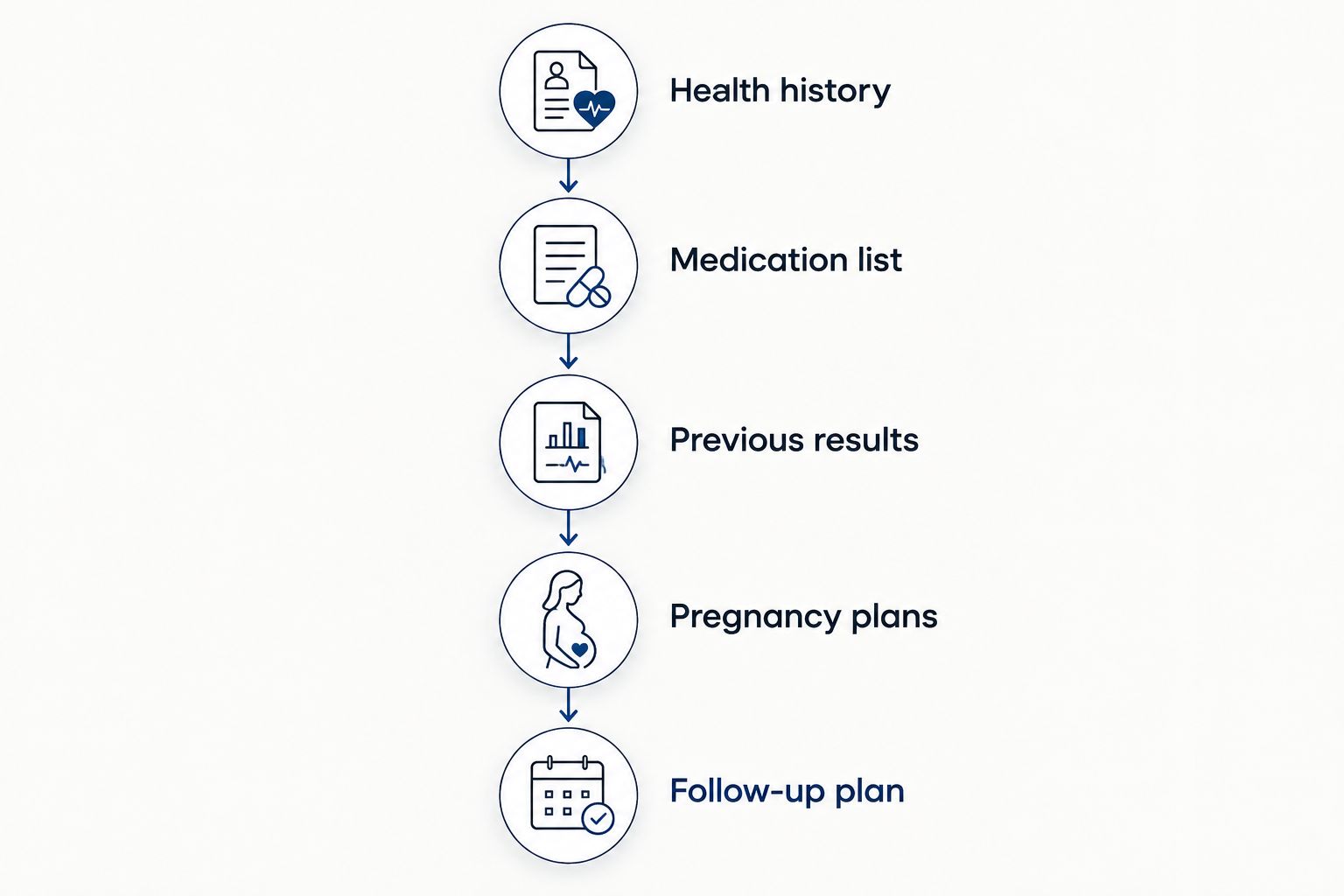
A useful review combines laboratory results with information that tests cannot capture. Prepare the following before your consultation:
- Health history: Include diabetes, kidney or liver disease, pancreatitis, gallbladder problems, significant digestive symptoms and relevant thyroid cancer history.
- Medication list: Include prescriptions, nonprescription medicines and supplements. Note any current weight-management treatment.
- Previous results: Bring dated reports, including reference ranges and any follow-up your previous clinician recommended.
- Pregnancy plans: Share pregnancy status, breastfeeding and plans to conceive when relevant.
- Follow-up plan: Ask who reviews results, how you receive recommendations and what symptoms require further assessment.
This information helps your clinician connect the results to prescribing decisions. A screenshot showing only a highlighted abnormal value leaves out context such as the test date, units and laboratory reference range.
Which tests are not automatic requirements?
An extensive hormone panel is not a universal prerequisite for GLP-1 weight loss. Testing for cortisol, reproductive hormones or other endocrine conditions should address a specific concern identified through your symptoms and examination.
Pancreatic enzyme testing is also not a substitute for reviewing a history of pancreatitis or evaluating new abdominal symptoms. Your clinician decides whether amylase or lipase testing has a diagnostic purpose. A normal baseline result does not guarantee that pancreatitis cannot occur later.
Routine calcitonin testing or thyroid ultrasound has uncertain value for detecting medullary thyroid cancer in patients taking these medications. Discuss a thyroid lump, persistent hoarseness or relevant family history directly rather than assuming a screening panel resolves the concern.
More testing is not automatically more useful. The strongest reason to order a test is that its result can change evaluation, treatment or monitoring.
Can normal lab results guarantee that treatment is safe?
Normal results cannot guarantee that GLP-1 weight loss treatment is safe for you. Laboratory testing does not fully assess medication interactions, severe digestive problems, pregnancy plans or personal and family medical history.
Your consultation must also cover expected side effects, warning symptoms and how follow-up works. Seek prompt medical assessment for severe or persistent abdominal pain, repeated vomiting with inability to keep fluids down or other concerning symptoms. Do not wait for a routine laboratory appointment to address an acute problem.
Do abnormal results mean you cannot start treatment?
Abnormal results do not automatically rule out GLP-1 weight loss treatment. The significance depends on the test, the degree of abnormality, your symptoms and the underlying cause.
Some findings require confirmation or treatment before prescribing. Others lead to closer monitoring or a coordinated plan for an existing condition. Ask your clinician to explain the next decision rather than interpreting the laboratory flag as a final answer.
How does testing fit into self-pay care?
Bainshealth provides GLP-1 weight loss care through a self-pay, cash-pay model; the practice does not currently accept or bill insurance. Ask for clear information about consultation, laboratory, medication and follow-up charges before proceeding, without assuming any component is included.
For a 2026 consultation, clarify who orders testing, where you complete it and who reviews the results. Also ask whether your existing laboratory reports are suitable. These questions help you understand the care process and your financial responsibility without assuming coverage or reimbursement.
Bainshealth confirms prescribing semaglutide and tirzepatide, but the choice requires an individualized clinical assessment. Established patients may also see their own provider for minor ailments or work-note requests up to twice a year when clinically appropriate; this is not unlimited primary care or a guarantee of a work note.
Discuss your weight-loss assessment
Ask about individualized testing, self-pay charges and continuity with your provider.
FAQ
Do I need blood tests before starting GLP-1 weight loss?
Your clinician decides which blood tests are appropriate before GLP-1 weight loss treatment. A1c or fasting glucose, kidney function, liver tests and cholesterol can provide useful baseline information, but there is no universal panel for every patient.
What does an A1c test tell my weight-loss provider?
An A1c test reflects average blood sugar over approximately 3 months. It helps assess diabetes or prediabetes alongside your medical history, though certain blood conditions can affect its accuracy.
Do I need to fast before my blood draw?
Fast only if your clinician or laboratory instructs you to do so. A1c itself does not require fasting, while a fasting glucose test does; instructions for other tests depend on what has been ordered.
Will I need a thyroid test before treatment?
Thyroid testing depends on your symptoms, history and clinical assessment. A normal TSH evaluates thyroid function but does not rule out medullary thyroid cancer history or multiple endocrine neoplasia type 2.
Can I use blood test results from another provider?
Bring your existing reports so your clinician can assess whether they are relevant and current enough. Include the test dates, units, reference ranges and any recommendations about abnormal findings.
How often will I need repeat labs during treatment?
Repeat testing depends on your baseline results, medical conditions, symptoms and treatment plan. Ask which changes would trigger testing rather than expecting a fixed schedule for everyone.
Does Bainshealth bill insurance for weight-loss care?
Bainshealth currently operates as a self-pay, cash-pay practice and does not accept or bill insurance. Ask how consultation, testing, medication and follow-up charges are handled before starting care.
One last thing
Before your 2026 consultation, write this question at the top of your notes: What decision will each test help us make? A useful answer connects the test to your health history, a prescribing decision or a monitoring need.
Do not treat normal bloodwork as permission to skip the rest of the assessment. The safest starting point is a provider who reviews the results with you, explains their limits and gives you a clear next step.