
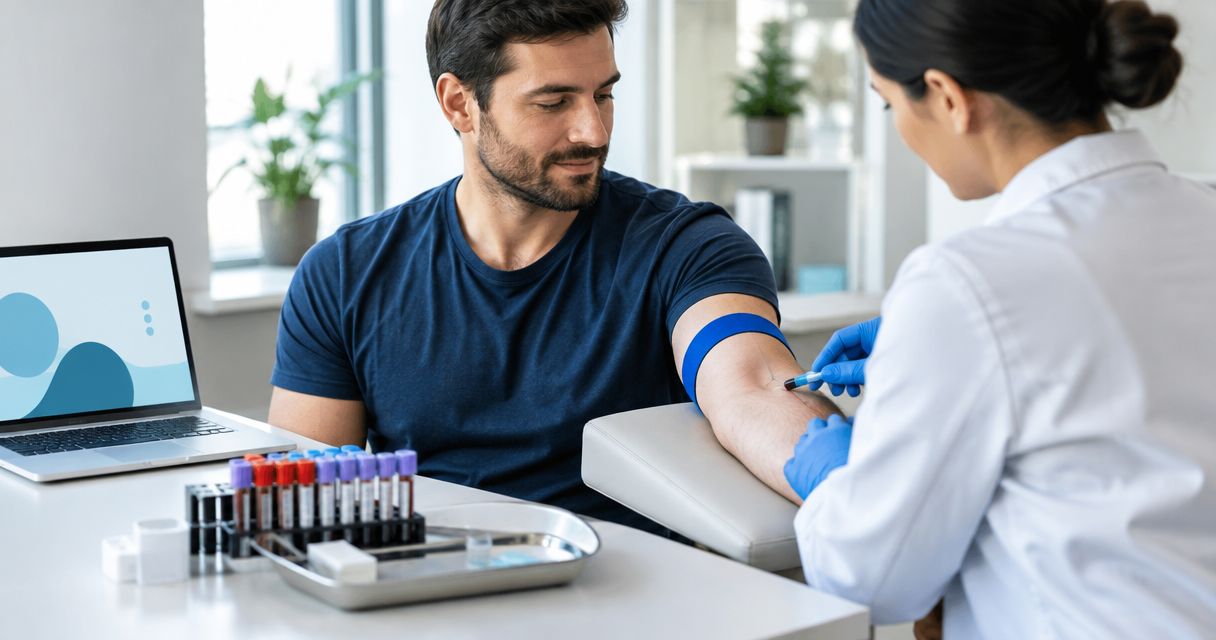
Before starting online TRT in 2026, you generally need total testosterone measured on two separate early mornings, a complete blood count to assess hemoglobin and hematocrit, and additional tests selected from your symptoms, medical history, and prostate risk. Your clinician may also request luteinizing hormone, free testosterone, prolactin, or prostate-specific antigen; a low testosterone result alone does not establish that TRT is appropriate.
- Starting trt online requires symptoms, repeat testosterone testing, and a safety assessment—not just one low result.
- The American Urological Association recommends two separate early-morning total testosterone measurements before diagnosing testosterone deficiency.
- A complete blood count checks hematocrit because testosterone treatment can increase red blood cell production.
- Bainshealth suits patients seeking personalized, self-pay TRT care with continuity from the same provider.
What blood tests are needed before online TRT?
The blood tests serve different purposes: confirming testosterone deficiency, investigating its cause, and identifying risks before treatment. For a personalized assessment, Bainshealth provides men's health services within a self-pay care model.
The American Urological Association's Testosterone Deficiency Guideline and the Endocrine Society's Testosterone Therapy in Men With Hypogonadism guideline distinguish diagnostic testing from treatment-safety testing. Not every patient needs every test below.
| Blood test | Best for | What it helps establish | Main limitation |
|---|---|---|---|
| Total testosterone | Initial diagnostic assessment | Whether testosterone is consistently low | One result does not establish a diagnosis |
| Complete blood count | Baseline treatment safety | Hemoglobin and hematocrit before treatment | Does not diagnose testosterone deficiency |
| Luteinizing hormone, or LH | Investigating confirmed low testosterone | Whether the pattern suggests a testicular or pituitary-hypothalamic cause | Must be interpreted alongside testosterone |
| Free testosterone, with SHBG when indicated | Clarifying borderline or difficult-to-interpret results | Whether changes in binding proteins affect interpretation | Assay methods and calculation methods matter |
| Prolactin | Selected patients with low testosterone and low or normal LH | Whether elevated prolactin warrants further investigation | Not a universal screening test for every patient |
| Prostate-specific antigen, or PSA | Baseline prostate assessment when indicated | Whether prostate findings require evaluation before treatment | An elevated result does not by itself diagnose cancer |
The right panel answers a clinical question; the longest panel is not automatically the best panel. Bring previous results with their collection times and reference ranges so your clinician can judge whether they remain useful.
Why this matters
Fatigue, reduced libido, erectile difficulties, and changes in body composition do not identify testosterone deficiency on their own. Sleep problems, medication effects, thyroid disease, depression, and other conditions can produce overlapping symptoms.
Online care changes how you meet your clinician, not the need for a sound diagnosis. A responsible evaluation connects symptoms, properly collected blood tests, examination findings when needed, and your goals—including future fertility.
Starting treatment without that assessment can obscure the original cause of low testosterone. It can also expose you to avoidable risks while leaving the problem that prompted your appointment untreated.
Total testosterone: confirm the result on separate mornings
The American Urological Association recommends measuring total testosterone on two separate early mornings before diagnosing testosterone deficiency. The Endocrine Society recommends confirming the diagnosis with a repeat morning fasting measurement.
Testosterone varies over the day and can fall temporarily during acute illness. A result collected during an illness or under different collection conditions needs context rather than an automatic prescription.
The American Urological Association uses 300 ng/dL as a reasonable total testosterone cutoff supporting the diagnosis. That threshold is not a treatment entitlement: symptoms and signs must also support testosterone deficiency.
For your 2026 consultation, bring the full laboratory report rather than a screenshot showing only a flagged result. The collection time, units, laboratory reference interval, and testing conditions help your provider interpret the number correctly.
If you work overnight shifts, tell your clinician before scheduling blood collection. Your sleep pattern matters when deciding how to obtain an interpretable sample; do not choose the collection time solely for convenience.
Complete blood count: establish hematocrit before treatment
A complete blood count, often abbreviated CBC, includes hemoglobin and hematocrit. Hematocrit describes the proportion of blood made up of red blood cells, and testosterone treatment can increase it.
The American Urological Association recommends checking hemoglobin and hematocrit before treatment. A high baseline result requires investigation rather than assuming it is harmless or prescribing around it.
Possible contributors include sleep apnea, smoking, lung disease, and living at altitude. Your provider interprets the result with your history and determines whether additional evaluation is necessary.
A satisfactory baseline CBC does not remove the need for monitoring after TRT begins. Red blood cell changes can develop during treatment, so the follow-up plan belongs in the initial prescribing discussion.
LH and prolactin: investigate why testosterone is low
Luteinizing hormone is a signal from the pituitary gland that tells the testes to produce testosterone. Measuring LH after low testosterone is confirmed helps distinguish different causes of testosterone deficiency.
Low testosterone with elevated LH suggests a different pattern from low testosterone with low or inappropriately normal LH. That distinction can change the next investigation and whether specialist assessment is needed.
The American Urological Association recommends prolactin testing when low testosterone occurs with low or low-normal LH. Persistently elevated prolactin needs evaluation; it should not be treated as an incidental number without context.
Neither test proves that you need a particular TRT formulation. Their value is diagnostic: they help your clinician avoid treating the laboratory result while overlooking its cause.
Free testosterone and SHBG: clarify selected results
Free testosterone is the portion of testosterone not bound to blood proteins. Sex hormone-binding globulin, or SHBG, is one of the proteins that affects how total testosterone relates to available testosterone.
Free testosterone testing is especially relevant when total testosterone is near the lower limit or a condition affecting SHBG makes the total result difficult to interpret. It is not a replacement for a proper initial assessment.
The Endocrine Society recommends appropriate measurement or calculation methods when free testosterone is needed. Different methods are not interchangeable, so a flag on a report cannot be interpreted reliably without knowing how the result was obtained.
Ask your provider what uncertainty the test will resolve. Order clarification tests because they change a decision, not because a larger panel appears more thorough.
PSA: assess prostate risk when indicated
Prostate-specific antigen is a blood marker used in prostate assessment. The American Urological Association recommends obtaining PSA before TRT in men over 40 years of age to help exclude an underlying prostate cancer concern.
An elevated PSA does not automatically mean cancer, and a normal PSA does not replace a clinical review. Your clinician considers age, previous PSA results, urinary symptoms, family history, and any relevant examination findings.
An unexplained abnormal result can require further assessment before a treatment decision. Online consultation does not eliminate that requirement or replace an in-person examination when one is clinically necessary.
Discuss prostate testing as part of informed consent rather than treating it as a paperwork step. The purpose is to identify a concern that changes the safety assessment.
Why the blood-test panel varies
There is no single panel that answers every patient's diagnostic and safety questions. The useful differences come from your history and existing findings:
- Symptoms and timing: Persistent symptoms need a different interpretation from symptoms occurring during a short illness.
- Previous results: Collection conditions, reference ranges, and borderline values determine whether repeat or clarification testing is useful.
- Medication history: Opioids, glucocorticoids, and prior testosterone or anabolic steroid use can affect the evaluation.
- Fertility goals: A plan to conceive changes the discussion because prescribed testosterone suppresses sperm production.
- Medical risks: Elevated hematocrit, sleep apnea, and prostate concerns can require further assessment before treatment.
- Other suspected conditions: Thyroid, metabolic, liver, or kidney testing belongs in the panel when the clinical history supports it.
A metabolic panel, lipid profile, or thyroid test can be useful without being a universal prerequisite for every TRT prescription. Ask which finding each proposed test is intended to investigate.
How do you prepare for an online TRT assessment?
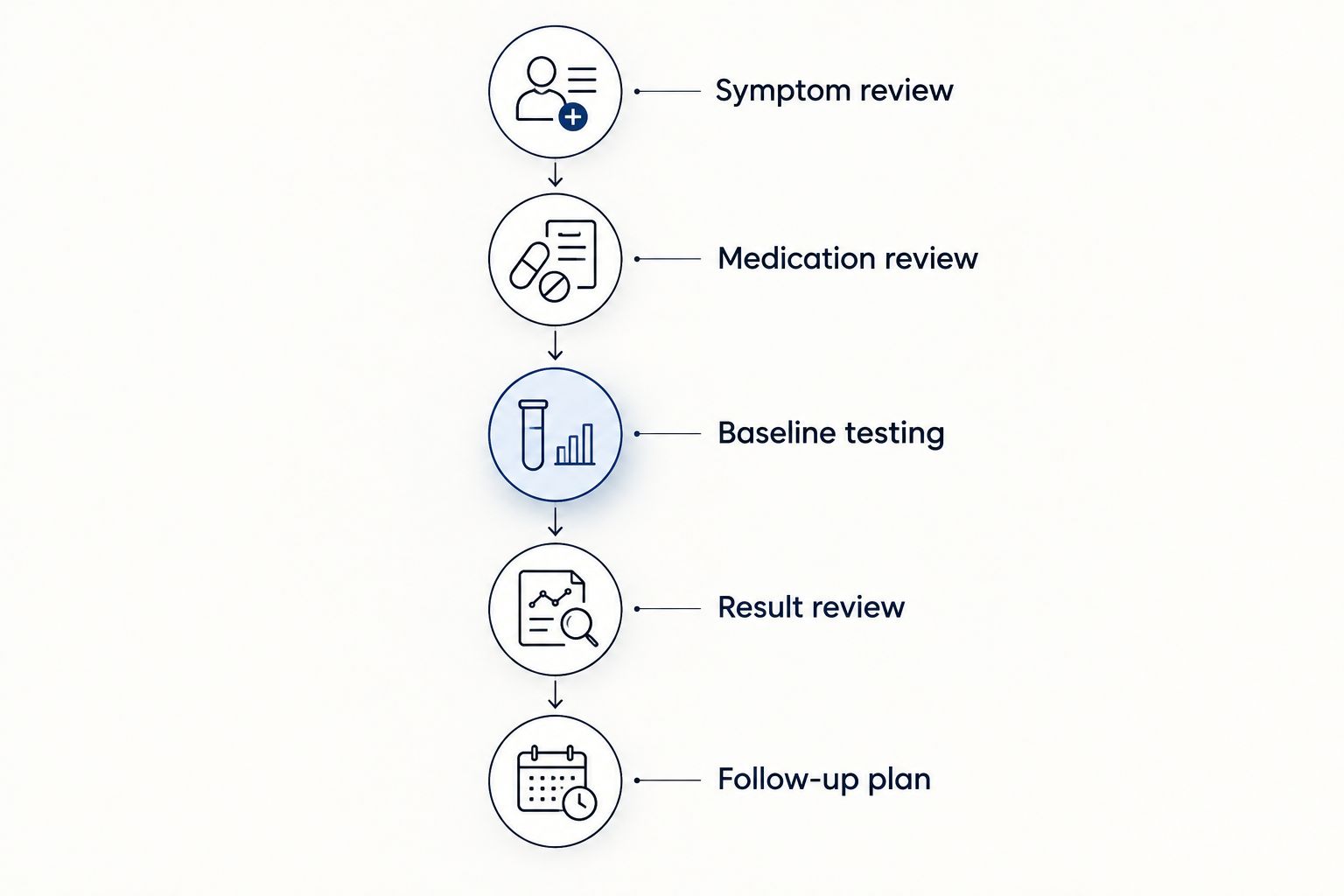
For a 2026 online TRT assessment, prepare both your medical history and the practical details of laboratory testing. Getting a blood draw is only one part of establishing whether treatment is appropriate.
- Symptom review: Record what changed, when it began, and how it affects daily life. Include sleep quality, sexual symptoms, and fertility plans.
- Medication review: List prescriptions, supplements, previous hormone treatment, and anabolic steroid exposure. Do not stop prescribed medication without instructions.
- Baseline testing: Follow the ordering clinician's collection instructions, including fasting when requested. Report illness or unusual sleep schedules before the draw.
- Result review: Discuss the complete results with your provider. Ask whether an abnormal finding needs repeat testing, further investigation, or referral.
- Follow-up plan: Confirm how treatment response, adverse effects, and laboratory results will be reviewed if treatment is prescribed.
For prospective patients in California and Oregon, confirm that the provider can evaluate and prescribe for you in your state. Do not assume that a practice's telehealth offering establishes availability in every state.
Can you start TRT online after one low testosterone result?
One low testosterone result is not enough to confirm testosterone deficiency. The American Urological Association recommends two separate early-morning measurements, interpreted alongside symptoms and signs.
Repeat testing protects against treating a temporary or misleading result. If the second result differs substantially, your provider should explain how collection conditions and the clinical history affect the next step.
Does a normal testosterone result rule out your symptoms?
A normal testosterone result does not make fatigue, sexual symptoms, or body composition concerns unimportant. It changes the evaluation: your clinician should consider other explanations rather than prescribing testosterone solely because the symptoms resemble low testosterone.
Selected patients need additional interpretation of free testosterone and SHBG. Others need assessment of sleep, medications, or another medical condition instead.
What happens after your baseline tests?
If treatment is appropriate, the next discussion covers expected benefits, uncertainties, delivery method, adverse effects, and monitoring. A prescription is not a promise that every symptom will improve.
Testosterone treatment can cause acne, increase hematocrit, and suppress sperm production. Tell your provider about fertility plans before prescribing decisions, not after treatment begins.
At Bainshealth, personalized TRT care emphasizes continuity with the same provider and direct provider access without a promised response time. Established patients may also see their own provider for minor ailments or work-note requests up to twice a year, when clinically appropriate; this is not unlimited primary care or a guarantee of a work note.
How should you discuss self-pay testing and treatment?
For a 2026 consultation, request a written explanation of what you pay the practice directly and which services are included. Ask separately about consultations, laboratory testing, medication, and follow-up rather than assuming they form one package.
Bainshealth currently operates as a self-pay, cash-pay practice and does not accept or bill insurance. Do not assume that laboratory charges, medication expenses, reimbursement, or HSA/FSA eligibility are included or established.
Transparent pricing means understanding the scope of care before agreeing to it. Ask how additional testing or a referral would be handled if the baseline assessment identifies another concern.
Discuss your TRT assessment
Review symptoms, baseline testing, and self-pay care before making a treatment decision.
FAQ
What blood tests do I need before starting TRT online?
You generally need repeat early-morning total testosterone measurements and a baseline complete blood count. LH, free testosterone, prolactin, and PSA are selected according to your results, history, and risk assessment.
Do I really need two testosterone blood tests?
Yes—the American Urological Association recommends two separate early-morning total testosterone measurements before diagnosing testosterone deficiency. Symptoms and signs must also support the diagnosis.
Is testosterone below 300 ng/dL enough to qualify for TRT?
A total testosterone level below 300 ng/dL supports the American Urological Association's diagnostic threshold, but it does not establish treatment eligibility by itself. Repeat testing, symptoms, safety findings, and the cause of the low result matter.
Do I need to fast before a testosterone blood test?
Follow your ordering clinician's instructions; the Endocrine Society recommends morning fasting measurements to confirm testosterone deficiency. Tell the clinician about illness or a night-shift schedule before arranging collection.
Why is a complete blood count needed before testosterone treatment?
A complete blood count establishes baseline hemoglobin and hematocrit because testosterone can increase red blood cell production. An elevated result needs clinical evaluation and can change the treatment plan.
Does everyone need prolactin testing before TRT?
No—prolactin testing is particularly relevant when low testosterone occurs with low or low-normal LH. Persistently elevated prolactin requires evaluation rather than an automatic TRT prescription.
Can I use previous blood-test results for an online TRT consultation?
Previous results can inform your assessment, but your provider decides whether they meet the diagnostic and safety requirements. Supply the full reports, including collection dates, times, units, and reference ranges.
Does Bainshealth accept insurance for TRT consultations?
Bainshealth currently provides self-pay, cash-pay care and does not accept or bill insurance. Ask for the current scope of consultation, testing, medication, and follow-up charges before agreeing to treatment.
One last thing
For your 2026 assessment, ask: What would make you recommend against TRT in my case? That question brings fertility, abnormal safety tests, alternative diagnoses, and unresolved symptoms into the conversation before a prescription becomes the focus.
The most useful outcome is a justified next step—not necessarily testosterone. Bring your reports and leave with a clear explanation of what they establish, what remains unresolved, and how follow-up will work.