

Before accepting a low TRT price, check whether the quote includes diagnostic testing, medication, supplies, follow-up appointments and ongoing safety monitoring. Compare the complete care plan, not the advertised fee alone. A low starting charge does not establish whether testosterone replacement therapy is appropriate for you or what you will pay throughout treatment.
- Compare TRT cost using the complete care plan, including labs, medication, supplies and follow-up appointments.
- Confirm diagnostic evaluation and safety monitoring before committing to online TRT.
- Bainshealth provides self-pay care; do not assume insurance billing or included medication and lab charges.
- Discuss fertility plans before treatment because testosterone therapy can suppress sperm production.
Why this matters
A TRT quote describes a financial arrangement, not a diagnosis. You need both a clear explanation of what you are purchasing and a clinical assessment of whether treatment fits your symptoms, laboratory results and health history.
For a 2026 comparison, separate the initial evaluation from ongoing treatment. Start with the blood tests needed before online TRT, then ask which tests the quoted arrangement includes. Clear scope matters more than an attractive headline fee.
What should you check before accepting a low TRT price?
Use the following checklist before you authorize payment or agree to recurring treatment. An unanswered question belongs in the consultation, not in the fine print you discover afterward.
- Diagnostic evaluation: Ask how the clinician establishes testosterone deficiency and evaluates other explanations for your symptoms.
- Laboratory testing: Confirm which baseline and follow-up tests are required, who orders them and whether you pay separately.
- Medication: Identify the prescribed formulation, dispensing arrangements and any separate medication charges.
- Supplies: Ask whether your treatment requires administration supplies and whether those are included.
- Follow-up care: Establish who reviews your results, how appointments work and how you contact the treating provider.
- Payment terms: Request written information about recurring charges, cancellation, renewal and treatment changes.
Keep the answers together so you can compare written proposals without relying on memory. A clear proposal distinguishes what is included, what is separate and what depends on the clinician's assessment.
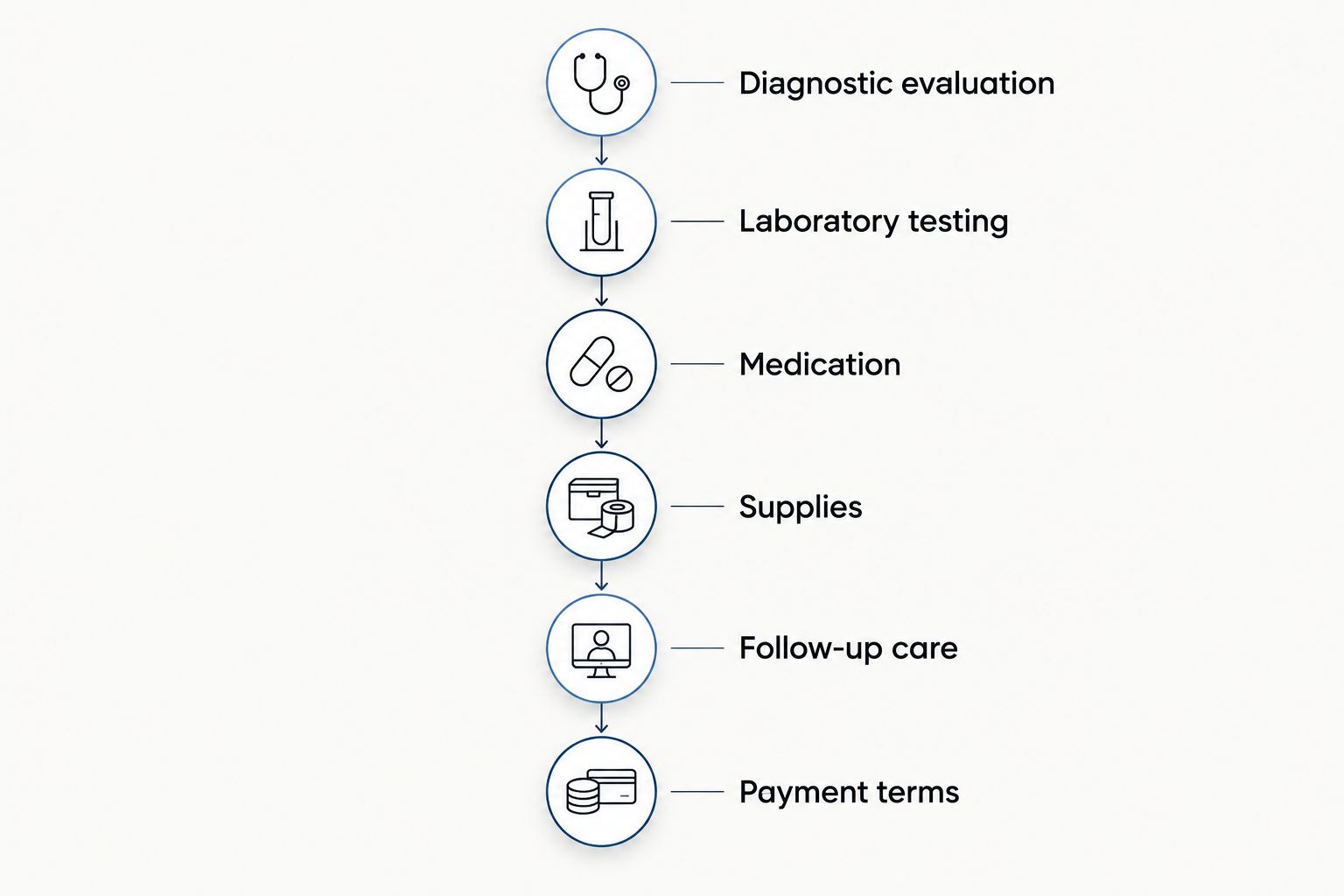
Compare the scope, not just the payment format
Subscription and pay-per-visit arrangements describe how charges are organized. Neither format proves that medication, laboratory testing or provider access is included.
| Arrangement | Best for | Practical advantage | Limitation to check |
|---|---|---|---|
| Subscription | Patients who prefer recurring payment arrangements | Groups the listed services under recurring terms | A subscription does not automatically include every treatment expense |
| Pay per visit | Patients who prefer charges tied to individual appointments | Makes the appointment charge distinct | Labs, medication and additional visits can remain separate |
Choose the arrangement with a clear written scope that fits your care needs. Do not treat either format as evidence of better clinical care.
Confirm that the evaluation comes before the prescription
Fatigue, reduced libido and changes in body composition are not specific to testosterone deficiency. Sleep problems, medication effects and other health conditions can produce overlapping symptoms. A responsible evaluation considers those possibilities rather than treating a symptom checklist as sufficient evidence.
Diagnosing testosterone deficiency generally requires compatible symptoms or signs and consistently low testosterone results. For adult men, diagnostic assessment commonly includes testosterone measurements on 2 separate mornings, with interpretation by a clinician. Illness, sleep patterns and other circumstances can affect the interpretation.
Ask what happens if your results do not support TRT. The answer should explain the next clinical step, not promise a prescription regardless of the findings. Treatment eligibility remains an individual medical decision.
For your 2026 consultation, bring previous laboratory reports and a current medication and supplement list. Tell the clinician about testosterone or other hormone use, including treatment obtained elsewhere. This gives the provider context that an isolated laboratory value cannot supply.
Separate baseline testing from ongoing monitoring
The tests needed before treatment and the tests needed during treatment serve different purposes. Baseline evaluation helps assess the diagnosis and relevant risks; follow-up testing helps assess treatment effects and safety.
Ask whether the proposal includes testosterone testing and a complete blood count, which measures blood cells and includes hematocrit. Testosterone treatment can raise hematocrit, increasing the proportion of red blood cells in your blood. The clinician should explain what a concerning result means for your treatment.
Prostate assessment, including discussion of prostate-specific antigen testing when appropriate, depends on factors such as age, risk and shared decision-making. Do not assume that every patient needs an identical testing panel or schedule.
Before accepting the quote, establish:
- Who orders and reviews each test.
- Whether laboratory charges are separate from practice charges.
- How abnormal results are communicated.
- What happens when additional testing is clinically necessary.
- Whether treatment changes require another appointment.
A lab order is not the same as clinical interpretation. Confirm that a provider will explain the findings and connect them to your treatment plan.
Clarify medication, supplies and treatment changes
Ask for the actual formulation under consideration rather than accepting a general reference to testosterone. Administration method affects the treatment routine, handling requirements and risks you need to understand. The prescription follows the clinical assessment; a quote should not substitute for that decision.
If injections are prescribed, ask about administration training, necessary supplies and safe sharps disposal. If a topical preparation is prescribed, discuss precautions against transferring medication to another person through skin contact. These are different practical responsibilities, not evidence that one method suits everyone.
Also ask who dispenses the medication and how you address a prescription problem. Confirm the process for discussing adverse effects, changing treatment or stopping therapy with medical guidance. Do not change your dose or add other hormone-related medication based on a pricing comparison.
A 2026 proposal should make clear whether the listed services remain the same if the prescribed formulation changes. Request clarification rather than assuming that every possible adjustment falls under the original arrangement.
Why TRT cost varies
TRT cost reflects the services, medication and monitoring attached to an individual treatment plan. Compare these drivers without assuming that a higher charge guarantees better care or a lower charge means inadequate care.
- Evaluation scope: Reviewing previous treatment and investigating overlapping symptoms can involve different clinical work.
- Laboratory requirements: Baseline testing, follow-up monitoring and additional investigation are distinct parts of care.
- Prescribed formulation: Different administration methods have different medication and supply requirements.
- Appointment structure: Scheduled reviews and additional problem-focused appointments need clearly stated terms.
- Provider access: Ask what direct communication includes and which concerns require a visit.
- Payment arrangement: Recurring and visit-based terms organize expenses differently; neither defines the entire treatment scope.
For a useful comparison, request the same categories from each provider. Comparing a medication-only quote with a quote covering evaluation and monitoring does not tell you which complete treatment plan fits your needs.
Discuss risks that a price comparison cannot resolve
TRT can suppress sperm production. If you want children now or in the future, raise that issue before starting treatment. Do not assume that a separate medication or later treatment change guarantees preservation or recovery of fertility.
Other issues to discuss include increased hematocrit, acne, fluid retention and symptoms of sleep apnea. Your history also matters: disclose cardiovascular conditions, prostate concerns and relevant previous treatment. This discussion helps the clinician assess suitability and monitoring needs; it does not predict your individual outcome.
Ask how the practice handles concerning symptoms between appointments. Routine messaging is not emergency care, and a treatment agreement should not leave you uncertain about that distinction. Chest pain, severe shortness of breath or stroke symptoms require emergency medical attention.
Do not accept guaranteed results as a substitute for informed consent. Treatment benefits, risks and the decision to continue require individual review.
Check continuity and access before committing
Knowing who follows your care matters when symptoms change or results need interpretation. Ask whether the same provider will review your progress, how you contact that provider and how clinically necessary appointments are arranged. Direct access does not mean an immediate response or unlimited care.
Bainshealth TRT care is best for patients seeking personalized, self-pay treatment with continuity from the same provider. The practice emphasizes direct provider access and convenient appointments; individual prescribing decisions still depend on your evaluation.
Established Bainshealth patients may also see their own provider for minor ailments or work-note requests up to twice a year, when clinically appropriate. This is a limited continuity-of-care benefit, not urgent care, unlimited primary care or a guarantee of a work note. Ask about the applicable visit terms rather than assuming these visits have no separate charge.
Understand the self-pay agreement
Bainshealth operates as a self-pay practice. Patients pay the practice directly; insurance credentialing has not been completed. Do not build your treatment decision around assumed insurance acceptance, reimbursement or coverage of medication and laboratory services.
Ask for transparent written pricing before committing. The agreement should identify practice charges, any separately billed services and the terms governing recurring payments. A clear explanation also distinguishes a consultation from a commitment to ongoing treatment.
For your 2026 budget, ask how the arrangement works across a 12-month planning period. This is a budgeting exercise, not a recommended treatment duration or monitoring schedule. Include the evaluation, expected reviews, required testing, medication and supplies without assuming they are bundled.
Bring these questions to a Bainshealth consultation to discuss your health history, treatment suitability and self-pay terms. Confirm the care plan before accepting the payment arrangement.
Is a low TRT quote enough to compare providers?
A low TRT quote is not enough to compare providers because the included services can differ. Request the same information about evaluation, testing, medication, supplies and follow-up before making a decision. Price becomes meaningful when the scope is clear.
Should you pay before your testosterone results are reviewed?
Confirm what you are purchasing before paying: a diagnostic consultation is different from an ongoing treatment agreement. Ask what happens if the evaluation does not support TRT, including any applicable cancellation or refund terms. Do not assume a particular policy.
What should you bring to a TRT consultation in 2026?
Bring prior testosterone results, relevant medical records and a current medication and supplement list to your 2026 TRT consultation. Include your symptoms, fertility goals and questions about payment terms. This helps keep the medical decision separate from the appeal of an advertised offer.
FAQ
What's the first thing to check in a low TRT cost quote?
Check exactly which services the TRT cost quote includes. Separate evaluation, laboratory testing, medication, supplies and follow-up care before comparing offers.
Does a TRT subscription always include blood tests?
A TRT subscription does not automatically include blood tests. Ask which tests are covered by the arrangement, where they are performed and whether you pay the laboratory separately.
Can I start TRT based only on symptoms?
Symptoms alone do not establish testosterone deficiency. A clinician evaluates symptoms or signs alongside consistently low testosterone results and relevant medical history.
Can TRT affect my ability to have children?
TRT can suppress sperm production and affect fertility. Discuss current and future plans for children before treatment rather than assuming the effects will be easily reversed.
Does Bainshealth accept insurance for TRT?
Bainshealth currently operates as a self-pay practice and has not completed insurance credentialing. Patients pay the practice directly; do not assume insurance billing, reimbursement or medication and laboratory coverage.
Will the lowest TRT quote be the cheapest overall?
The lowest advertised TRT quote does not establish the lowest overall expense. Compare the complete written scope, including separate medication, laboratory, supply and appointment charges.
Can I switch TRT providers without another evaluation?
Do not assume a new provider will continue TRT without reviewing your history and results. Ask what records, testing and consultation the receiving clinician requires before changing your care arrangement.
One last thing
Ask the provider to explain what happens if TRT is not appropriate for you. That question separates the diagnostic consultation from the purchase of ongoing treatment. Accepting a clearly explained evaluation is different from committing to a prescription before the medical decision is made.