

Follow-up visits support GLP-1 weight loss by checking treatment response, identifying side effects, and helping your clinician decide whether your plan remains appropriate. They also give you a place to discuss nutrition, hydration, strength, and barriers to staying on treatment. A prescription starts care; ongoing assessment keeps treatment decisions connected to your health rather than the scale alone.
- GLP-1 weight loss follow-ups assess progress, side effects, nutrition, and whether treatment remains appropriate.
- Bainshealth is best suited to patients seeking self-pay medical weight loss with continuity from the same provider.
- Scheduled appointments support ongoing monitoring; concerning symptoms require earlier assessment, not a wait for your next visit.
- Bring your weight trend, symptom history, medication list, and questions to each follow-up.
How do follow-up visits support GLP-1 weight loss?
Follow-ups turn observations into clinical decisions. Your clinician considers changes in weight alongside appetite, eating patterns, symptoms, medical history, and other medications. A lower number on the scale does not, by itself, establish that treatment is safe or appropriate.
If you are preparing for treatment in 2026, the guide to what happens at a GLP-1 weight loss consultation explains the starting point. Follow-up appointments revisit that initial assessment as your response becomes clearer.
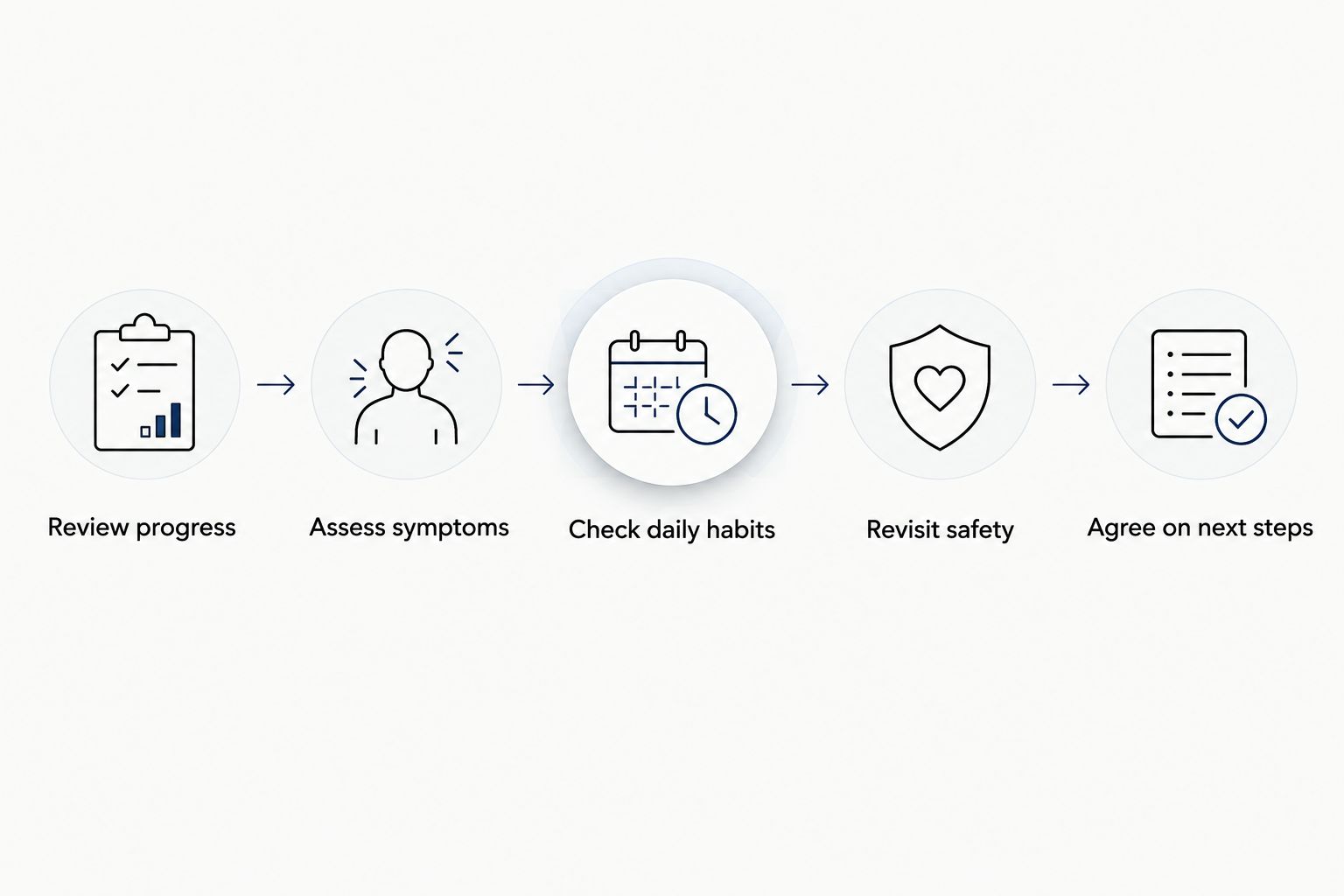
A useful appointment follows this sequence:
- Review progress. Discuss your weight trend, appetite, daily functioning, and goals rather than treating one measurement as the whole result.
- Assess symptoms. Describe nausea, vomiting, constipation, diarrhea, abdominal pain, or difficulty eating and drinking.
- Check daily habits. Review meal patterns, fluid intake, physical activity, and whether appetite changes are interfering with adequate nutrition.
- Revisit safety. Report new medications, diagnoses, pregnancy plans, procedures, or other changes relevant to prescribing.
- Agree on next steps. Confirm what to monitor, when to contact the practice, and when another assessment is needed.
These are topics for an individualized clinical review, not instructions to change your medication yourself. Your prescribing clinician determines whether continuing, changing, pausing, or stopping treatment is appropriate.
Why this matters
GLP-1 medicines affect appetite and slow stomach emptying. Those effects can support weight management, but gastrointestinal symptoms can also interfere with food and fluid intake. Your clinician needs to understand both sides of your response.
Follow-up also creates a record of change. A symptom that began after treatment started deserves a different discussion from one that existed beforehand. Knowing when it began, how often it occurs, and how it affects daily life helps your clinician assess it.
For your 2026 treatment plan, define success as progress you can sustain safely—not weight change at any cost. Follow-up visits provide the setting to revisit that definition when symptoms, routines, or health circumstances change.
What should your clinician assess beyond body weight?
Your weight trend is useful, but it does not explain everything. Appetite suppression, food intake, hydration, activity, and symptoms help show how treatment is affecting you between appointments.
Ask your clinician to connect each concern to a practical next step. That might mean further assessment, nutrition support, a discussion of activity, or a prescribing decision. The appropriate response depends on your circumstances.
| Follow-up focus | What it helps assess | Main benefit | Limitation | Best for |
|---|---|---|---|---|
| Weight trend | Change across repeated measurements | Shows direction over time | Cannot distinguish fat, muscle, and fluid changes by itself | Tracking overall progress |
| Symptoms and intake | Tolerability and ability to eat and drink | Identifies concerns that need attention | Depends on accurate reporting between visits | Assessing treatment burden |
| Strength and daily function | Changes in activity and physical capability | Broadens assessment beyond the scale | Does not directly measure body composition | Discussing muscle preservation and function |
| Medical and medication review | Changes relevant to prescribing | Keeps decisions connected to your current health | Requires you to report outside care and new medicines | Maintaining an individualized plan |
Nutrition and hydration
Reduced appetite does not remove your need for adequate nutrition. Tell your clinician if you are skipping meals because food feels unappealing, struggling to tolerate food, or having trouble drinking enough fluids. Persistent vomiting or diarrhea deserves particular attention because it can contribute to dehydration.
Bring concrete examples of what you can eat and drink. A brief description of a typical day is more useful than saying your diet is good or bad. Ask whether you need individualized nutrition advice rather than setting restrictive targets yourself.
Muscle, strength, and body composition
Weight loss can include loss of lean tissue as well as fat. Discuss strength, resistance exercise, and adequate protein with your clinician, especially if you feel weaker or less able to carry out normal activities.
Body composition describes the different tissues that make up body weight. A home scale alone cannot tell you how much of a change comes from fat, muscle, or fluid. Ask which assessments would actually inform your care before arranging additional testing.
Other medications and health changes
Bring an updated medication and supplement list. This is especially important if you use medicines that lower blood glucose, because combinations can change the risk of low blood sugar.
Also report planned procedures and anesthesia. GLP-1 medicines delay stomach emptying, so the prescribing and procedural teams need to know what you take. Do not independently stop or adjust treatment before a procedure; obtain instructions from the clinicians responsible for your care.
Why follow-up needs vary
There is no single appointment schedule that fits every patient. In 2026, ask for a follow-up plan tied to your clinical needs rather than assuming that an advertised program schedule covers every situation.
The main factors include:
- Side effects and tolerability. Persistent symptoms or difficulty eating and drinking require assessment outside a routine progress discussion.
- Treatment changes. Your clinician needs to review how you respond after a prescribing change.
- Other medical conditions. Diabetes and other health concerns affect what your clinician needs to monitor.
- Other medications. Changes to your medication list can alter treatment risks and monitoring needs.
- Progress and function. An unexpected weight trend, weakness, or a substantial change in appetite deserves context.
- New health circumstances. Pregnancy plans, procedures, or a new diagnosis can change whether the current plan remains appropriate.
Frequent appointments are not automatically better care. The useful question is whether the schedule allows appropriate assessment and whether you know how to raise a concern between visits.
What should you bring to a follow-up visit?
Prepare a short summary rather than relying on memory. Your clinician needs the pattern: when a symptom started, whether it is improving, and what it prevents you from doing.
For your next appointment in 2026, bring:
- Your available weight measurements, with dates and measurement conditions.
- A symptom record describing timing, severity, and effects on eating, drinking, sleep, or activity.
- Your current medications and supplements, including prescriptions from other clinicians.
- Examples of meals and fluids you tolerate and anything you are consistently avoiding.
- Changes in strength, exercise tolerance, or daily functioning.
- Questions about the next appointment, provider access, and direct-payment arrangements.
Lead with the concern that affects your safety or daily functioning most. If vomiting is preventing you from drinking, that matters more than a small change on the scale.
You do not need a perfect tracking system. A clear account of what has changed is the goal. Avoid turning monitoring into a reason to ignore symptoms until you have collected more information.
When should you contact a clinician before the next appointment?
Contact your clinician earlier when symptoms persist, worsen, or interfere with eating and drinking. Routine appointments are not a substitute for assessment of a new problem.
Seek urgent medical assessment for severe or persistent abdominal pain, particularly with vomiting; persistent vomiting with inability to keep fluids down; or signs of significant dehydration. Severe abdominal pain can signal a serious condition, including pancreatitis, and needs assessment rather than self-diagnosis.
Trouble breathing, swelling of the face or throat, fainting, or severe confusion require emergency help. Do not wait for a portal reply or a scheduled weight-loss follow-up when symptoms suggest an emergency.
Ask the prescribing clinician which symptoms need routine contact, prompt assessment, or emergency care. Medication-specific safety information matters; a general article cannot replace the instructions for your prescription.
How does continuity with the same provider help?
Continuity lets your provider compare your current experience with your earlier history and treatment decisions. It also gives you a consistent person with whom to discuss goals, side effects, and changes in your health.
Bainshealth is best suited to patients seeking self-pay medical weight loss with continuity from the same provider. The practice emphasizes personalized care, direct provider access, transparent pricing, and convenient appointments. Direct access does not promise an immediate response or emergency care.
Bainshealth operates as a self-pay practice: you pay the practice directly, and insurance credentialing has not been completed. Before booking, clarify what the treatment arrangement includes, how follow-up care is charged, and which services require separate payment. Do not assume medication, laboratory testing, or other services are included.
Established Bainshealth patients may also see their own provider for minor ailments or work-note requests up to twice a year, when clinically appropriate. This is a continuity-of-care perk, not a promise of free visits, unlimited primary care, guaranteed appointments, or guaranteed work notes.
For prospective patients in California and Oregon, confirm whether the practice can provide the requested care in your state. Use these questions for choosing a GLP-1 weight loss provider to compare clinical follow-up and access—not just the initial prescription.
Discuss your weight-loss follow-up plan
Ask about personalized care, provider access, and self-pay treatment arrangements.
How often should I have GLP-1 weight loss follow-ups?
Your prescribing clinician should set the schedule around your treatment, symptoms, medical history, and response. Ask when your next visit should occur and what would require earlier contact.
Before starting treatment in 2026, confirm who handles questions between visits. A calendar entry is not a complete follow-up plan unless you also understand how to raise a concern.
What if my weight loss slows down?
Slower weight loss is a reason to review the broader pattern, not a reason to change medication yourself. Your clinician can assess the weight trend alongside eating patterns, tolerability, activity, other medicines, and treatment goals.
Bring your measurements and describe what has changed. Do not pursue faster loss by eating inadequately or independently increasing medication.
FAQ
Do I still need follow-ups if GLP-1 treatment is working?
Yes, follow-ups assess safety and tolerability as well as weight change. Feeling satisfied with progress does not replace review of symptoms, nutrition, and changes in your health.
Can a follow-up happen by telehealth?
Some follow-up discussions can take place by telehealth when clinically appropriate. Your clinician determines whether you need an examination, laboratory testing, or another form of assessment.
Should I wait until my next visit to mention nausea?
Do not wait if nausea persists, worsens, or interferes with eating and drinking. Contact your clinician for assessment rather than changing medication yourself.
What should I track between GLP-1 appointments?
Track your available weight measurements, symptoms, food and fluid tolerance, and changes in daily function. Bring an updated medication list and describe when each concern began.
Does Bainshealth accept insurance for weight-loss care?
Bainshealth currently operates as a self-pay practice, and insurance credentialing has not been completed. Clarify direct-payment arrangements and what services are included before booking.
Can I request a work note from my established provider?
Established patients may see their own provider for minor ailments or work-note requests up to twice a year, when clinically appropriate. This does not guarantee a work note, an appointment, or a no-cost visit.
Can I change my GLP-1 medication between visits?
Do not change your medication on your own. Contact your prescribing clinician so the decision reflects your symptoms, medical history, and treatment response.
One last thing
Before leaving a follow-up, ask: What should make me contact you before the next visit? That answer connects the appointment to the days that follow. Knowing what to watch for—and where to seek help—is part of treatment, not an optional extra.