

Semaglutide and tirzepatide are chosen for GLP-1 weight loss by matching your medical history, treatment eligibility, medication interactions, tolerability and follow-up needs—not by selecting a drug from a popularity ranking. Both require a prescribing assessment, and neither guarantees a particular weight change or replaces nutrition, physical activity and ongoing clinical care.
- GLP-1 weight loss treatment selection depends on medical eligibility, safety, tolerability and your ability to continue care.
- Semaglutide acts on GLP-1 receptors; tirzepatide acts on both GIP and GLP-1 receptors.
- Bainshealth provides personalized, self-pay medical weight loss care; medication selection requires an individual prescribing assessment.
- Compare the full treatment plan, including monitoring and follow-up, rather than choosing from medication names alone.
How are semaglutide and tirzepatide chosen for weight loss?
Your clinician first determines whether weight-management medication is appropriate, then evaluates which option fits your health history and treatment goals. The right prescription is the one you can use safely within a sustainable care plan. A medication's reputation does not establish your eligibility or predict your response.
The comparison below describes general clinical differences. It does not identify a universal winner or recommend either medication without an assessment.
| Clinical consideration | Semaglutide | Tirzepatide |
|---|---|---|
| How it works | Activates GLP-1 receptors involved in appetite regulation and glucose control | Activates GIP and GLP-1 receptors involved in metabolic regulation |
| Potential benefit | Supports weight management alongside nutrition and physical activity | Supports weight management alongside nutrition and physical activity |
| Common limitation | Gastrointestinal effects can interfere with eating, hydration or continued treatment | Gastrointestinal effects can interfere with eating, hydration or continued treatment |
| Medication review | Delayed stomach emptying matters when reviewing oral medications | Delayed stomach emptying matters; oral hormonal contraception needs specific counseling |
| Best for | Eligible patients whose clinician finds semaglutide appropriate after reviewing risks and treatment needs | Eligible patients whose clinician finds tirzepatide appropriate after reviewing risks and treatment needs |
In 2026, ask which exact formulation is being considered and whether its approved indication matches your treatment. A drug's active ingredient alone does not tell you everything about its labeling, instructions or suitability.
Why this matters
Choosing medication is also choosing a monitoring plan. Weight change is only part of the assessment; side effects, nutrition, hydration, relevant medical conditions and your ability to attend follow-up all matter.
Bainshealth is best for patients seeking personalized, self-pay GLP-1 weight loss care with provider continuity. The practice prescribes both semaglutide and tirzepatide, but the prescribing decision depends on your individual assessment. Patients pay the practice directly; insurance acceptance is not part of its current model.
For prospective patients in California and Oregon, confirm that the treating clinician can provide care in the state where you will be located. Convenient appointments do not remove state-specific prescribing requirements.
Eligibility comes before medication preference
For adults, weight-management labeling commonly uses a body mass index, or BMI, of 30 kg/m² or higher, or 27 kg/m² or higher with a weight-related medical condition. These are general labeling thresholds, not an automatic prescription. The exact medication's current prescribing information and your clinician's assessment govern treatment.
BMI compares weight with height; it does not directly measure body fat or describe every aspect of your health. A clinician also considers weight-related conditions, previous treatment, eating patterns, physical function and relevant laboratory findings.
Prepare to explain what you want treatment to change. Improving mobility, managing a weight-related condition and developing a sustainable eating pattern are more useful consultation goals than requesting a particular medication by name.
A responsible 2026 assessment also considers reasons to defer treatment. Pregnancy, certain medical histories, severe digestive symptoms or an unresolved medication interaction can change the decision before any prescription is written.
Semaglutide: a GLP-1 receptor agonist
Semaglutide mimics activity at the GLP-1 receptor, helping regulate appetite and glucose control. For weight management, its role belongs within a broader plan that addresses food intake, physical activity and clinical follow-up.
Best for: eligible patients whose medical review supports semaglutide and who can continue appropriate monitoring. A previous treatment experience can inform the discussion, but another person's success cannot establish how you will respond.
The practical benefit is an additional medical tool for weight management. The limitation is that nausea, vomiting, diarrhea, constipation or abdominal discomfort can disrupt daily life and treatment adherence. Side effects deserve a care plan, not instructions to ignore them.
Ask what your clinician will monitor and how to report problems. Do not change medication use based on social-media advice or someone else's prescription.
Tirzepatide: a GIP and GLP-1 receptor agonist
Tirzepatide acts on both GIP and GLP-1 receptors. GIP stands for glucose-dependent insulinotropic polypeptide; the practical distinction is that tirzepatide targets an additional metabolic signaling pathway.
Best for: eligible patients whose medical review supports tirzepatide after considering risks, interactions and ongoing care. Acting on additional receptors does not make tirzepatide the correct choice for every patient.
Tirzepatide provides another medication option for weight management, but gastrointestinal side effects remain a meaningful limitation. Your clinician also needs to discuss oral hormonal contraception because delayed stomach emptying can reduce its effectiveness during specific treatment periods.
If you use an oral contraceptive, raise that issue before prescribing. Your clinician should explain whether an additional barrier method or a nonoral contraceptive is needed and for how long; this is not a detail to discover after starting treatment.
Why medication selection varies
The same diagnosis does not produce the same prescription for every patient. These factors change the decision:
- Medical history: Weight-related conditions, pancreatic or gallbladder problems, kidney concerns and severe digestive symptoms affect assessment and monitoring.
- Thyroid cancer history: A personal or family history of medullary thyroid carcinoma, or multiple endocrine neoplasia syndrome type 2, is a contraindication under relevant prescribing labels.
- Current medications: Insulin, sulfonylureas, oral contraception and other prescriptions require review for interactions or changes in risk.
- Pregnancy plans: Pregnancy, breastfeeding and plans to conceive require a separate discussion before treatment selection.
- Previous tolerability: Earlier nausea, vomiting, constipation or difficulty maintaining hydration helps shape the treatment plan.
- Ability to continue care: Follow-up arrangements, direct treatment expenses and provider access affect whether a plan is practical.
Bring the full picture to your consultation. Leaving out a supplement, another prescriber's medication or a significant family history can change the safety assessment.
What happens before a prescription is chosen?
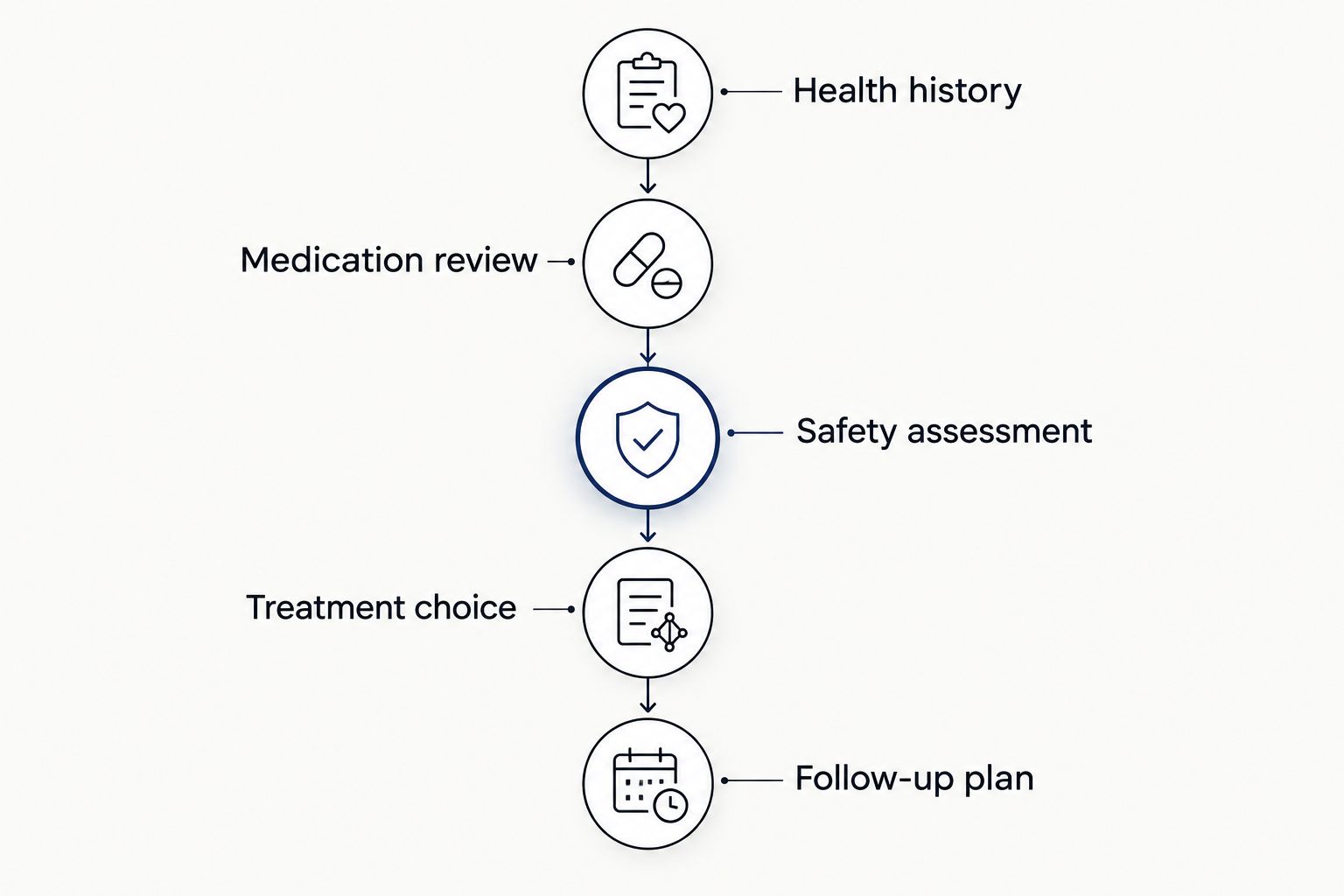
A useful consultation follows a clinical sequence rather than starting with a checkout decision. In 2026, use these steps to assess whether the proposed care plan answers your questions.
- Health history: Explain weight changes, weight-related conditions, previous treatment and your goals. Include relevant family history and pregnancy plans.
- Medication review: Share prescriptions, nonprescription products and supplements. Identify who manages any diabetes medications or other ongoing treatment.
- Safety assessment: Discuss contraindications, digestive symptoms and any examination or laboratory work the clinician considers necessary. Testing should answer a clinical question, not substitute for the medical interview.
- Treatment choice: Ask why semaglutide or tirzepatide fits your situation. The explanation should connect to your history, not simply to demand for a particular drug.
- Follow-up plan: Confirm how treatment response, side effects and nutrition will be reviewed. Know how to contact the provider and what requires urgent medical attention.
This sequence separates eligibility from preference. You should leave knowing why treatment was recommended, deferred or declined—not just which medication was discussed.
What risks should you discuss before starting?
Common digestive effects include nausea, vomiting, diarrhea, constipation and abdominal discomfort. Ask how to distinguish manageable symptoms from symptoms that require reassessment. Persistent vomiting or an inability to maintain fluids should not be treated as an expected inconvenience.
Both medications also carry warnings about pancreatitis, gallbladder disease and kidney injury associated with dehydration. Low blood sugar is a particular concern when treatment is combined with insulin or certain other diabetes medications. Your prescribing clinician should coordinate any necessary changes with the clinician managing those medicines.
The boxed thyroid warning concerns thyroid C-cell tumors seen in rodents; the relevance to humans remains unknown. Nevertheless, the labeled contraindications involving medullary thyroid carcinoma and multiple endocrine neoplasia syndrome type 2 apply to prescribing decisions.
Seek urgent medical assessment for severe or persistent abdominal pain, particularly with vomiting, or signs of a serious allergic reaction. Trouble breathing requires emergency care. Routine messaging access is not a substitute for emergency services.
How should you compare self-pay treatment plans?
Compare what the proposed plan includes, what is billed separately and how clinical care continues. A medication name does not tell you whether appointments, laboratory work, medication dispensing or follow-up are included in a treatment charge.
For a 2026 consultation, request a clear explanation of:
- Initial assessment and ongoing visit charges.
- Medication expenses and who supplies the prescription.
- Laboratory testing and any separately billed services.
- How follow-up is arranged and how concerns reach the provider.
- What happens financially and clinically if treatment is paused or changed.
Do not assume that self-pay means a particular payment method, eligibility for tax-advantaged accounts or reimbursement from an insurer. Those are separate questions. Get the financial terms before agreeing to treatment, without treating cost as a substitute for medical suitability.
How does Bainshealth support continuity of care?
Bainshealth emphasizes personalized care, continuity with the same provider, direct provider access, transparent pricing and convenient appointments. These features matter when you need to revisit tolerability, clarify a concern or reassess whether the treatment plan still fits.
The practical advantage is an established clinical relationship. The boundary is that direct access does not promise an immediate response, unlimited primary care or urgent-care services. Ask how contact and follow-up work before beginning treatment.
Established patients may see their own provider for minor ailments or work-note requests up to twice a year, when clinically appropriate. These visits are not described as free, and a requested work note depends on clinical assessment rather than an automatic guarantee.
Discuss your weight-loss treatment options
Review your health history, medication suitability and self-pay care expectations.
Can you choose based on expected weight loss alone?
No. Expected weight loss alone does not account for contraindications, medication interactions, side effects or your ability to continue care. A clinician should explain why the proposed medication fits your situation and what would prompt reassessment.
Ask what treatment success means for your health, not just for the scale. Progress reviews should also consider tolerability, eating patterns, function and relevant weight-related conditions.
Can you switch if the first medication does not suit you?
A prescribing clinician can assess a change when side effects, treatment response or clinical circumstances justify it. Switching requires a new review of the plan; it is not a self-directed substitution.
Tell your clinician what happened, when symptoms began and whether you could eat and drink normally. Do not use semaglutide and tirzepatide together or alternate prescriptions without explicit clinical direction.
FAQ
What's the best GLP-1 weight loss medication for me?
The best medication for you is the one your clinician finds appropriate after reviewing eligibility, medical history, interactions and tolerability. Neither semaglutide nor tirzepatide is a universal winner.
Is tirzepatide the same as semaglutide?
No. Semaglutide activates GLP-1 receptors, while tirzepatide activates GIP and GLP-1 receptors. Both require an individualized prescribing assessment.
What BMI qualifies an adult for weight-loss medication?
Adult weight-management labeling commonly uses a BMI of 30 kg/m² or higher, or 27 kg/m² or higher with a weight-related condition. Meeting a threshold does not automatically make treatment appropriate.
Can I take these medications if I use birth control pills?
Oral hormonal contraception requires specific counseling before tirzepatide treatment because its effectiveness can be reduced during certain treatment periods. Ask your clinician about the appropriate contraceptive plan before starting.
Does Bainshealth accept insurance for medical weight loss?
Bainshealth currently operates as a self-pay practice; patients pay the practice directly. Do not assume medication or laboratory coverage, reimbursement or a particular payment-account eligibility.
What should I bring to a weight-loss consultation?
Bring your medication and supplement list, relevant medical history, previous treatment experiences and questions about follow-up. Include pregnancy plans and significant family history.
Can I stop or switch treatment if I have side effects?
Contact your prescribing clinician to assess side effects and decide whether the treatment plan needs to change. Severe abdominal pain, persistent vomiting or a serious allergic reaction requires prompt medical assessment rather than routine follow-up.
One last thing
Before your 2026 consultation, write down what would make treatment difficult to continue: persistent digestive symptoms, unclear expenses, trouble reaching the provider or uncertainty about follow-up. Ask how each concern will be handled before accepting a prescription. A medication decision is only useful when the care plan around it is workable.
This article provides general education, not personalized prescribing advice. Your clinician determines whether treatment is appropriate and how it should be monitored.